
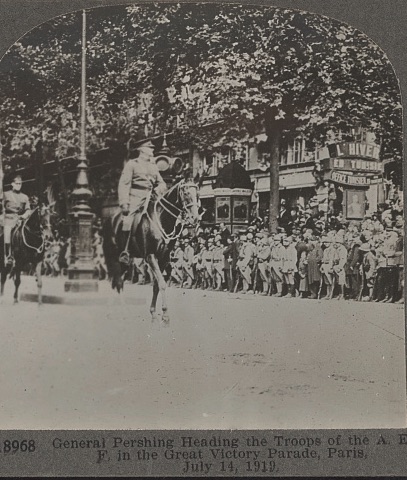
On July 14, 1919, General John J. Pershing proudly spearheaded a massive contingent of the American Expeditionary Forces through the streets of Paris during the monumental Bastille Day Victory Parade. Occurring just months after the signing of the Treaty of Versailles, this spectacular global celebration united the Allied powers in a grand visual display of military triumph over the Central Powers.
The poignant, unmentioned reality behind this euphoric parade was the deep, brewing tension between Pershing and European military commanders regarding how the American troops should march. French and British leadership aggressively demanded that the American soldiers be broken up and integrated into European units to fill gaps in their depleted ranks. Pershing fiercely refused, insisting that his men march as a distinct, unified American army—a stubborn diplomatic victory that was proudly mirrored in their independent, synchronized formation through the Arc de Triomphe.
Image via Library of Congress, no known restrictions.
