
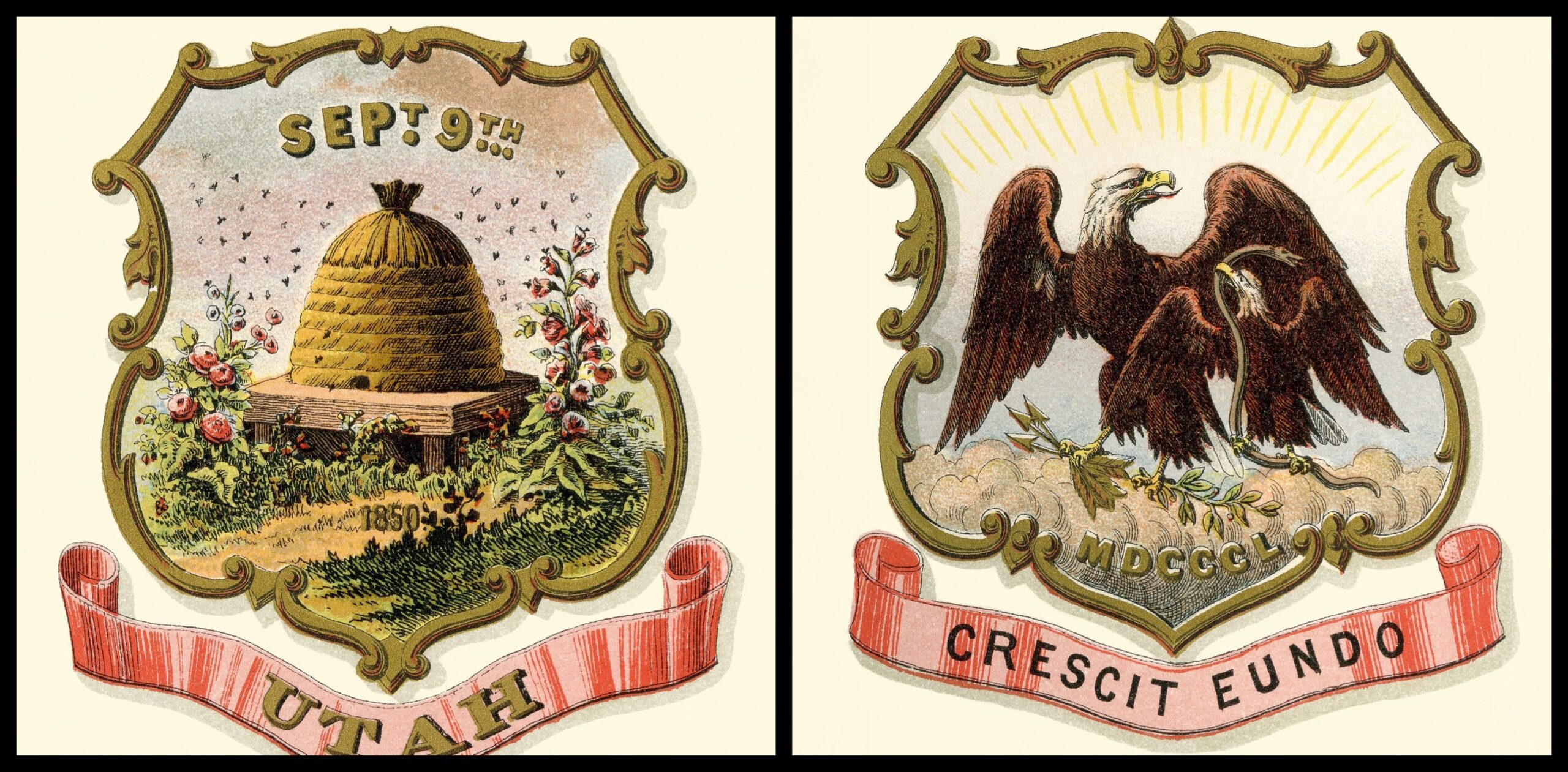
On September 9, 1850, Congress enacted the laws creating the Territory of Utah and the Territory of New Mexico—central measures of the Compromise of 1850. The acts established federal territorial governments across a vast and culturally diverse portion of the Southwest acquired from Mexico after the Mexican-American War.
The new territories quickly became part of the national struggle over slavery. Rather than expressly prohibiting or protecting slavery in Utah and New Mexico, Congress left the issue to the territorial governments and to decisions made when the territories later sought statehood. This approach, commonly described as popular sovereignty, was intended to ease sectional conflict. Instead, it preserved uncertainty and kept the expansion of slavery at the center of national politics.
The territorial acts established governors, judges, legislatures, and administrative capitals, bringing the region more directly under federal authority. For Mexican American residents, Indigenous peoples, Latter-day Saint settlers, and other communities, the new governments reshaped political power, land claims, legal institutions, and relations with the expanding United States.
The territorial framework created in 1850 did not remain fixed. Later changes—including the Gadsden Purchase in 1853 and the creation of Arizona Territory in 1863—substantially redrew the political map of the Southwest.
Images: The coat of arms of the Territory of Utah and the coat of arms of the Territory of New Mexico, via Wikimedia Commons; public domain.
