
On June 4, 1928, the U.S. Supreme Court ruled that wiretapping without a search warrant was not a violation of the Fourth Amendment of the U.S. Constitution.
In Olmstead vs. The United States Supreme Court Justice William Howard Taft said:
“The amendment does not forbid what was done here. There was no searching. There was no seizure. The evidence was secured by the use of the sense of hearing and that only…”
Olmstead, a bootlegger, was sentenced to four years in prison, but later received a full pardon from FDR. A year after Olmstead’s death, in 1967, the U.S. Supreme Court overturned their Olmstead ruling in Katz vs. United States which acknowledged that protection of person’s rights extended to a “reasonable expectation of privacy.”
The Olmstead decision reflected an era when the law struggled to keep pace with rapid technological advancements. It took nearly forty years for the legal system to evolve and recognize that constitutional protections must shield a citizen’s private thoughts and conversations, not just their physical property.
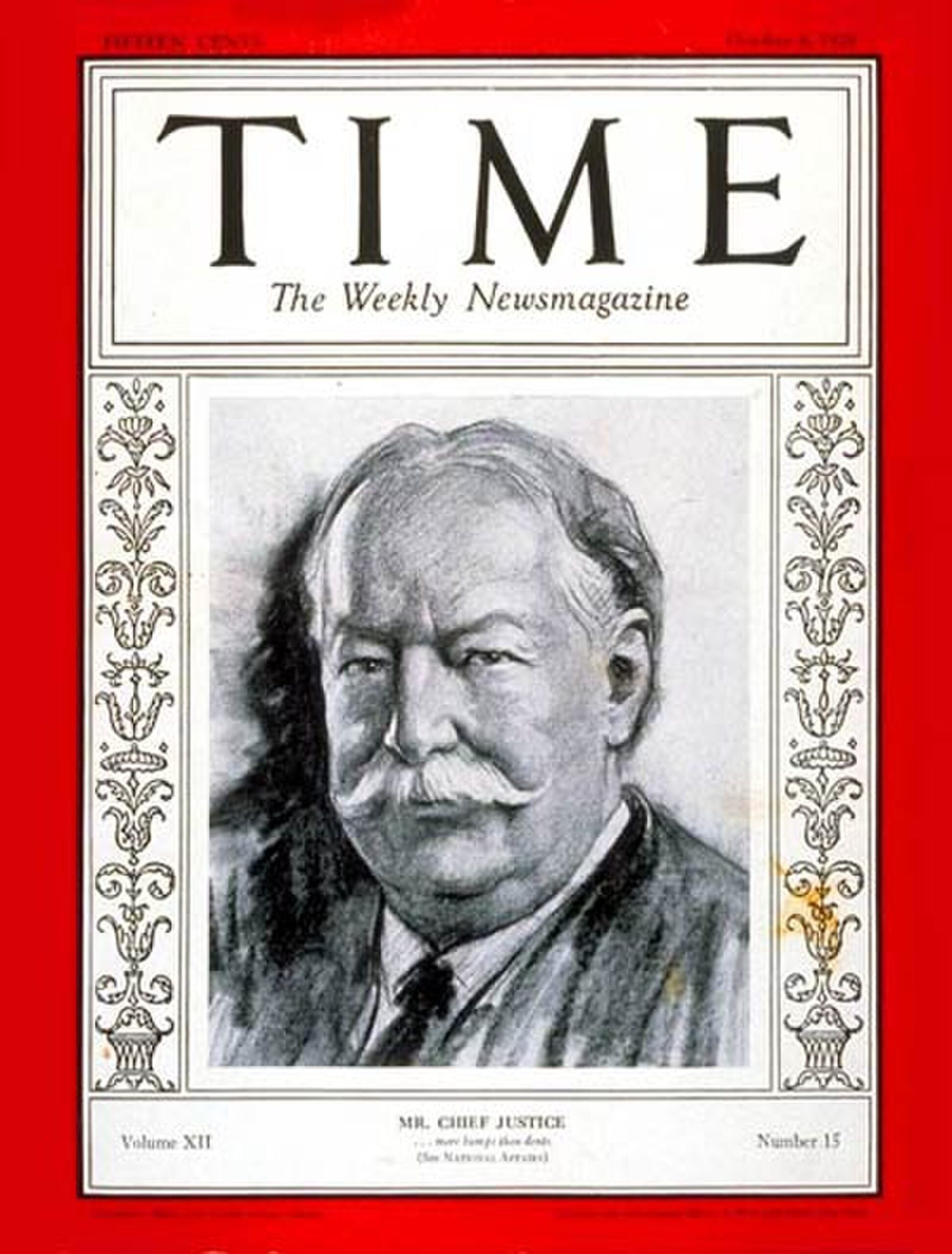
Image of a cover of Time Magazine featuring Supreme Court Justice and former U.S. President, William Howard Taft from 1928 via Wikimedia Commons, public domain.
