
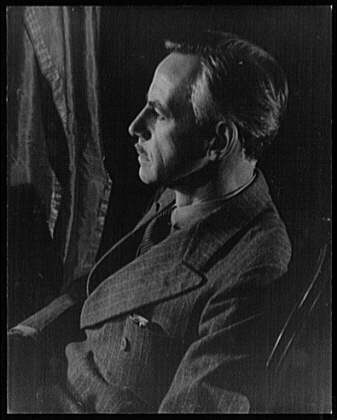
Renowned American playwright Eugene O’Neill was born on October 16, 1888, in a hotel room in New York City. Raised largely on the road by his father, a touring tragic actor, O’Neill grew up surrounded by theater but deeply scarred by a fractured, unstable childhood marked by family addiction and emotional isolation. This rare archival portrait captures him as a young boy in the early 1890s, offering a glimpse of the solemn child who would channel immense personal suffering into a body of work that revolutionized American drama.
Before O’Neill, American theater was often dominated by melodrama and light farce. He broke that mold by bringing gritty realism and tragic themes inspired by Greek drama and European naturalism to the stage, populating his plays with sailors, laborers, and people living on society’s margins. Across his career, he wrote more than fifty plays exploring despair, addiction, family rupture, and psychological trauma. His somber worldview is distilled in one of his most famous lines: “Man is born broken. He lives by mending. The grace of God is glue!”
Of the many intense dramas he created, only one was a comedy: the nostalgic and affectionate Ah, Wilderness!, a bittersweet vision of warm American family life that O’Neill himself never fully experienced. His tragic masterpieces—including Long Day’s Journey into Night and The Iceman Cometh—earned him four Pulitzer Prizes for Drama, three in his lifetime and one posthumously, as well as the 1936 Nobel Prize in Literature. He remains the first and only American playwright to receive that honor. This childhood photograph stands as a haunting prelude to the life of a literary giant who taught American theater how to confront the deepest shadows of the human soul.
