
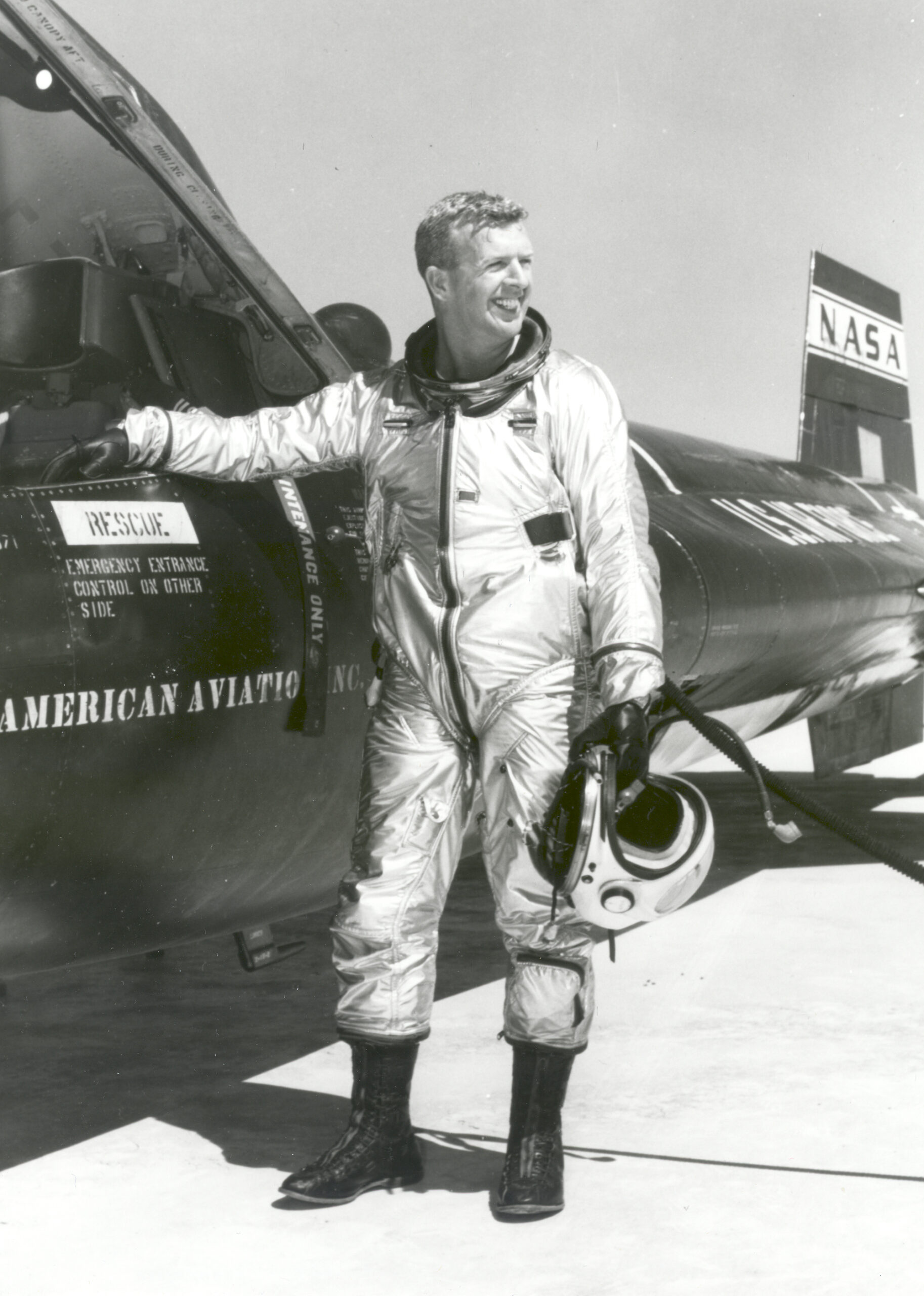
On August 4, 1960, American pilot Joe Walker flew 2,196 mph in the X-15 hypersonic rocket plane. The flight flew over 78,000 feet into the air.
The high-altitude run was a crucial stepping stone for the early American space program, pushing the physical limits of aerospace engineering. Flying the X-15 required pilots to control a vehicle that functioned as a traditional jet in the lower atmosphere, but transformed into a spacecraft requiring reaction-control thrusters at high altitudes. Walker’s data on aerodynamic heating and atmospheric re-entry structural stress was directly integrated into the design of NASA’s Project Mercury capsules, helping safely map out the path to orbital spaceflight.
Image of Walker with the X-15 in the early 1960s via Wikimedia Commons, public domain
