
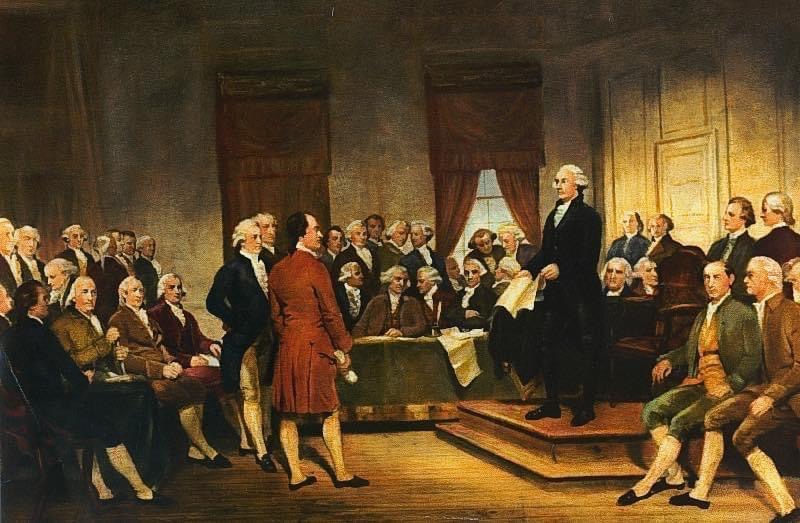
Inside the sweltering, closed-door quarters of the Philadelphia State House, a fragile vision of a new nation began to take concrete, legal form on August 6, 1787. After months of fierce arguments and ideological deadlocks, the Constitutional Convention delegates finally gathered to dissect the first comprehensive draft of the United States Constitution, prepared by the Committee of Detail. Holding the parchment in his large hands, George Washington looked upon the structural blueprint of the government he would eventually lead, dipping his quill into ink to scratch down his meticulous revisions directly onto the working document.
These handwritten notes provide a deeply intimate window into a moment where many participants believed human intellect and divine providence uniquely converged to breathe life into the American experiment. For the delegates, the painstaking process of crafting this document was not merely an exercise in political compromise, but a sacred duty to build a framework capable of preserving God-given liberties. Each scratch of Washington’s pen represents a conscious step away from monarchy and toward an uncharted future of self-governance, capturing a profound moment where abstract philosophies of freedom were hammered into the enduring framework of a living republic.
