
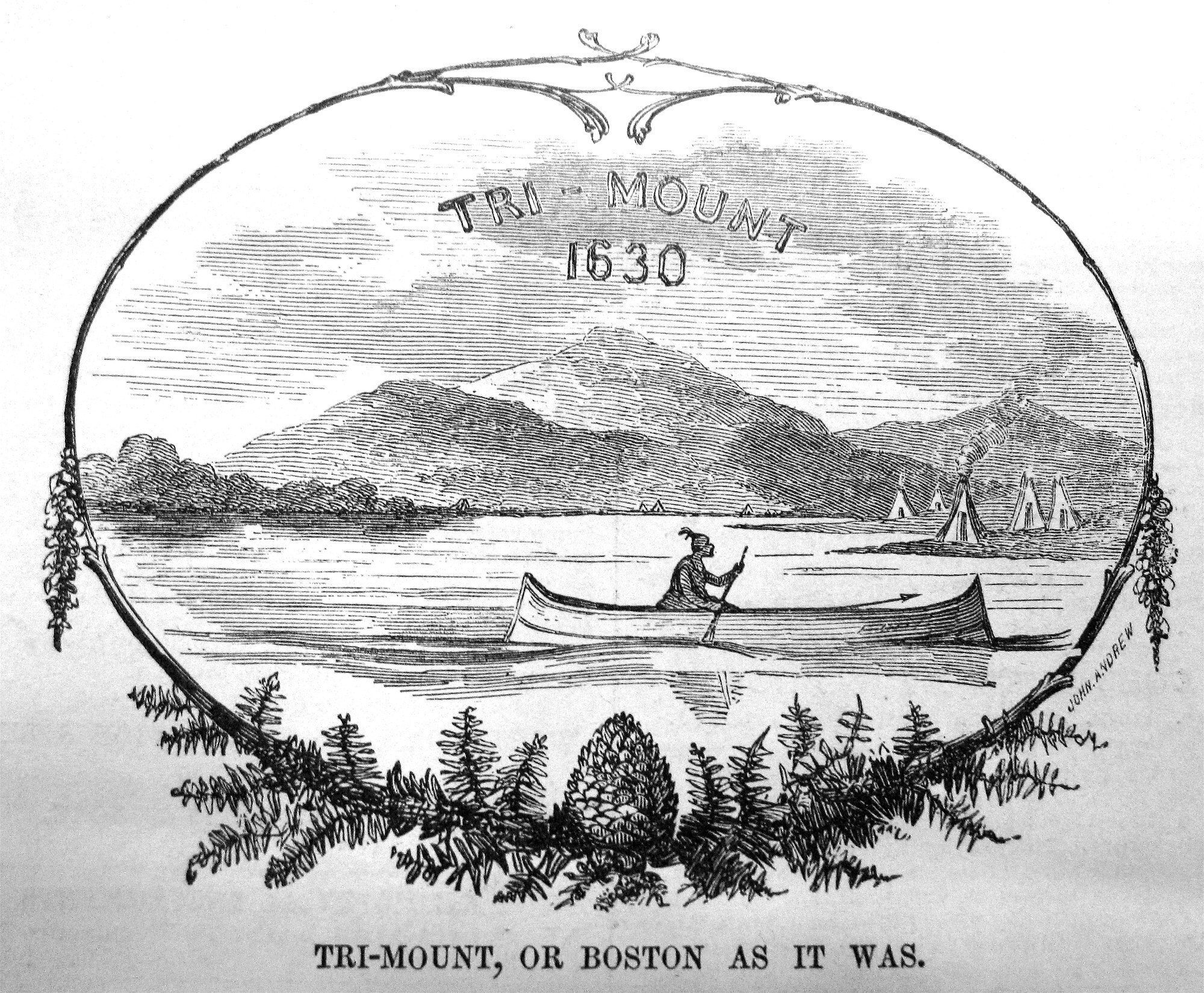
On September 7, 1630, according to the Massachusetts Bay Colony’s court records (Old Style dating), colonial officials ordered that the English settlement they called “Trimountaine” be called “Boston.” The action occurred after the arrival of the Winthrop Fleet and marked the establishment of Boston as a principal settlement of the Massachusetts Bay Colony. Historical accounts sometimes give a nearby September date because of differences between Old Style and modern calendar dating.
But the peninsula did not begin with the English settlement. It lay within the homeland of the Massachusett people, whose communities had long used and inhabited the region. The peninsula is commonly recorded as Shawmut or Shawmutt in English sources. The exact meaning of the name cannot be known with certainty from the Anglicized surviving spelling, although interpretations have included “living waters,” “clear waters,” and a place associated with travel by boat.
“Trimountaine” was an English name for the peninsula’s distinctive three-peaked hill—part of what is now Beacon Hill—not its original Indigenous name. The colonial name survives in shortened form in Tremont Street.
Colonial leaders selected “Boston” in reference to Boston, Lincolnshire, England, a community associated with several leading Puritans and colonial supporters. The order renamed the English colonial town; it did not erase the prior Massachusett presence, relationships to the land, or the Indigenous history of Shawmut.
Image via Wikimedia Commons, public domain in the United States.
