
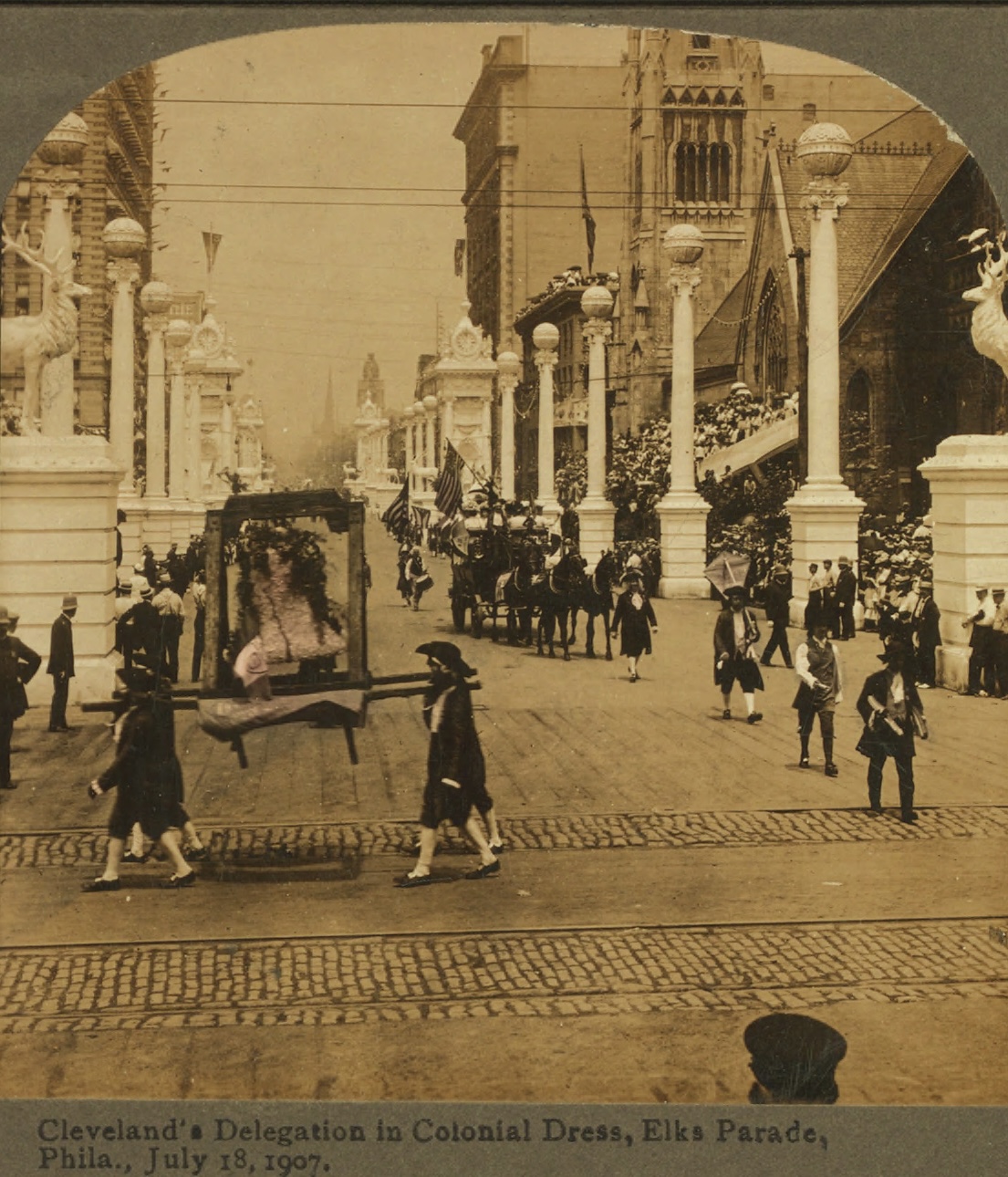
On July 18, 1907, an extraordinary display of fraternal pageantry took over Philadelphia, Pennsylvania, as the Cleveland, Ohio, delegation marched proudly through the city during the Elks Grand Lodge Parade. Clad in meticulously detailed colonial attire featuring tri‑corner hats and powdered wigs, the marching group paid homage to America’s Revolutionary heritage in the very city where independence was declared. Thousands of spectators lined Broad Street to witness the elaborate spectacle, which united diverse fraternal delegations from across the country in a mass celebration of civic pride and national unity.
The unmentioned municipal challenge behind this massive 1907 parade was the sheer physical chaos that the Elks convention brought to Philadelphia’s rapidly expanding electric transit grid. Over 300,000 visiting Elks members flooded the city over the weekend, overwhelming local hotels and forcing thousands of delegates to sleep inside chartered train cars sitting on the tracks. To accommodate the unprecedented crowd during the scorching July heat, city engineers worked continuously to keep the electric streetcars running, transforming a simple fraternal gathering into one of the earliest tests of a modern American city’s industrial infrastructure.
In the aftermath, Philadelphia’s city planners reviewed how a fraternal parade had strained the municipal power system. The Elks convention became an unexpected case study in urban stress testing, prompting reforms in emergency power allocation and large‑event planning. July 18, 1907, ultimately helped shape the future of Philadelphia’s infrastructure, proving that civic celebration could reveal the hidden vulnerabilities of a rapidly modernizing metropolis.
