
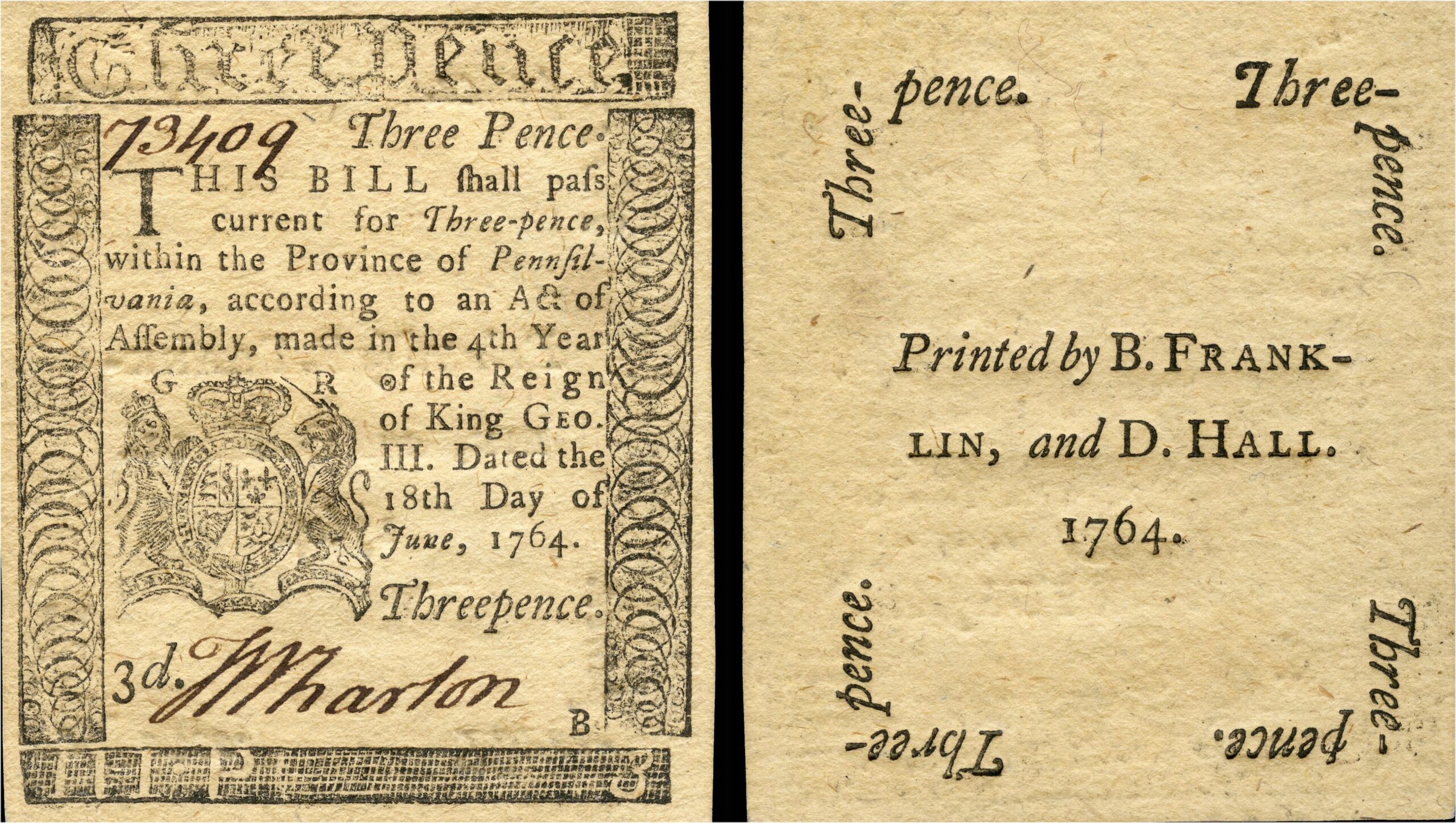
A Pennsylvania Three Pence note dated June 18, 1764 is a compact but powerful artifact of colonial America—one produced by the printing partnership of Benjamin Franklin and David Hall during a moment of rising tension between the colonies and the Crown. Issued under the authority of the Pennsylvania Assembly in the early reign of King George III, this bill reflects the colony’s dependence on paper currency at a time when hard coin was scarce. Its text, serial number, and handwritten signature authenticate it as an individually issued piece of circulating money, not merely a printed form. The presence of the British royal arms underscores Pennsylvania’s status as a colony, even as local legislatures struggled for financial autonomy.
What makes this note especially significant is its connection to Franklin’s pioneering work in anti‑counterfeiting. His shop developed specialized paper, unique typefaces, and nature‑printed designs—intricate impressions made from real leaves whose vein patterns were impossible for counterfeiters to duplicate. Notes from this 1764 emission sit at the crossroads of economics, politics, and print innovation—produced in the same year as the Currency Act of 1764, which restricted colonial paper money and helped fuel the grievances that led to the Revolution. A surviving example like this one is not just old money; it’s a tangible piece of the story of how the colonies financed themselves on the eve of independence.
