
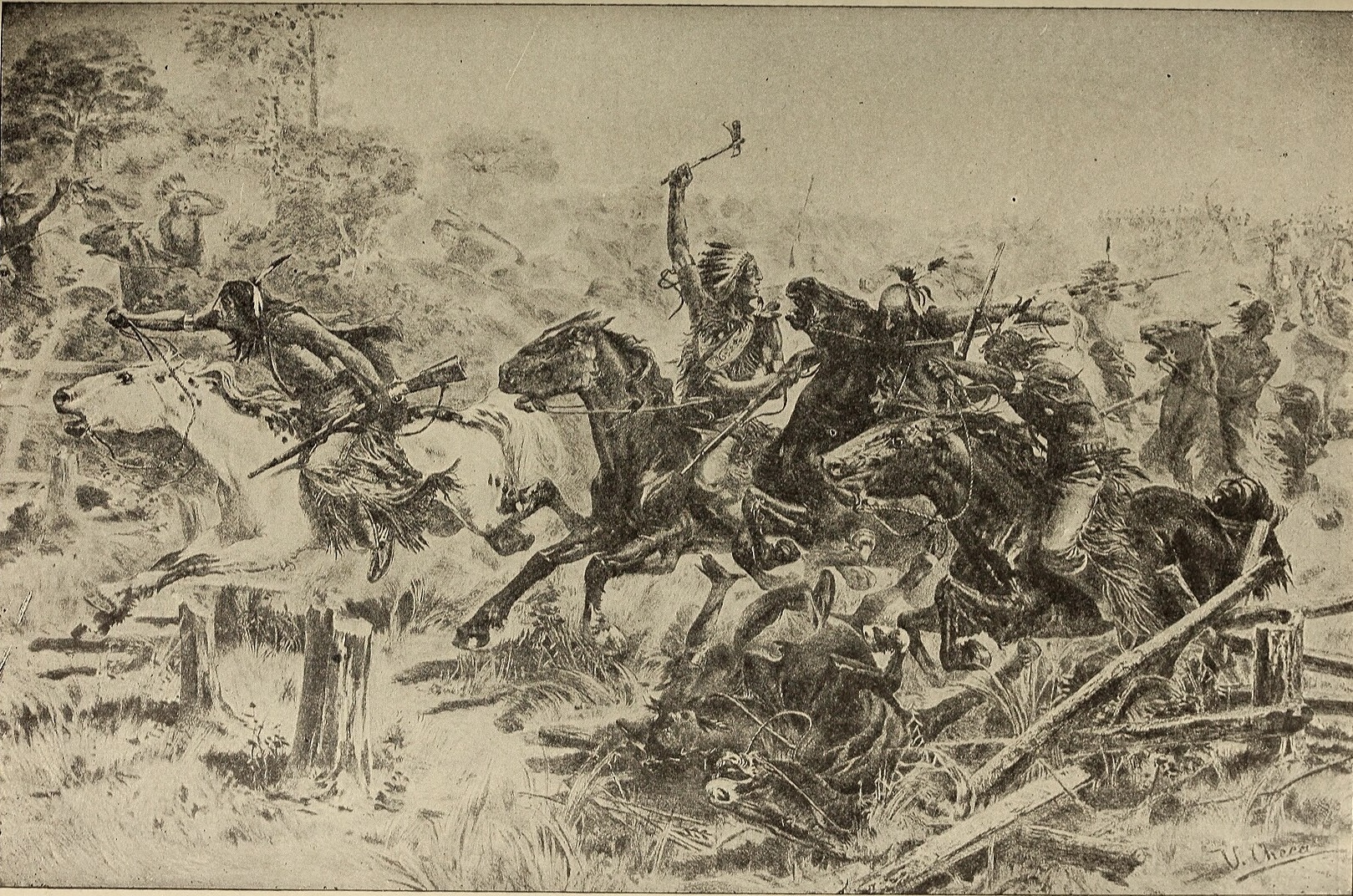
The multi-month, roughly 1,170-mile fighting retreat of the Nez Perce people reached a tragic, climactic impasse on the morning of September 30, 1877, when federal troops attacked their encampment near the Bear Paw Mountains in Montana Territory. After eluding several U.S. Army columns across the Pacific Northwest, the non-treaty Nimiipuu (Nez Perce) bands traveling with Chief Joseph had stopped less than 40 miles south of the Canadian border. They hoped to rest their exhausted families before continuing north to seek refuge in Canada.
Before dawn, Colonel Nelson A. Miles’s pursuing force—about 400 soldiers and 50 scouts, including troops from the 2nd and 7th U.S. Cavalry and the 5th U.S. Infantry—moved to intercept them. Though a rider warned the camp that soldiers were approaching, Miles’s attack achieved its central objective: the 2nd Cavalry swept toward and captured much of the Nez Perce horse herd, while the 7th Cavalry charged toward the bluffs above the camp.
The Nez Perce defenders stopped the cavalry assault and fought to protect the camp and their families. Ollikut, Chief Joseph’s younger brother and an important leader among the bands, was killed early in the fighting, along with other prominent Nez Perce leaders.
Outnumbered and increasingly confined to defensive positions, the Nez Perce resisted the opening attack strongly enough to force Miles to abandon a quick overrun and begin a siege. The battle continued from September 30 through October 5 in severe conditions. It became the final major engagement of the 1877 Nez Perce War, ending when Chief Joseph, speaking for those who remained, agreed to cease fighting.
Image credit: Battle of Bear Paw archival documentation, via Wikimedia Commons, public domain.
