
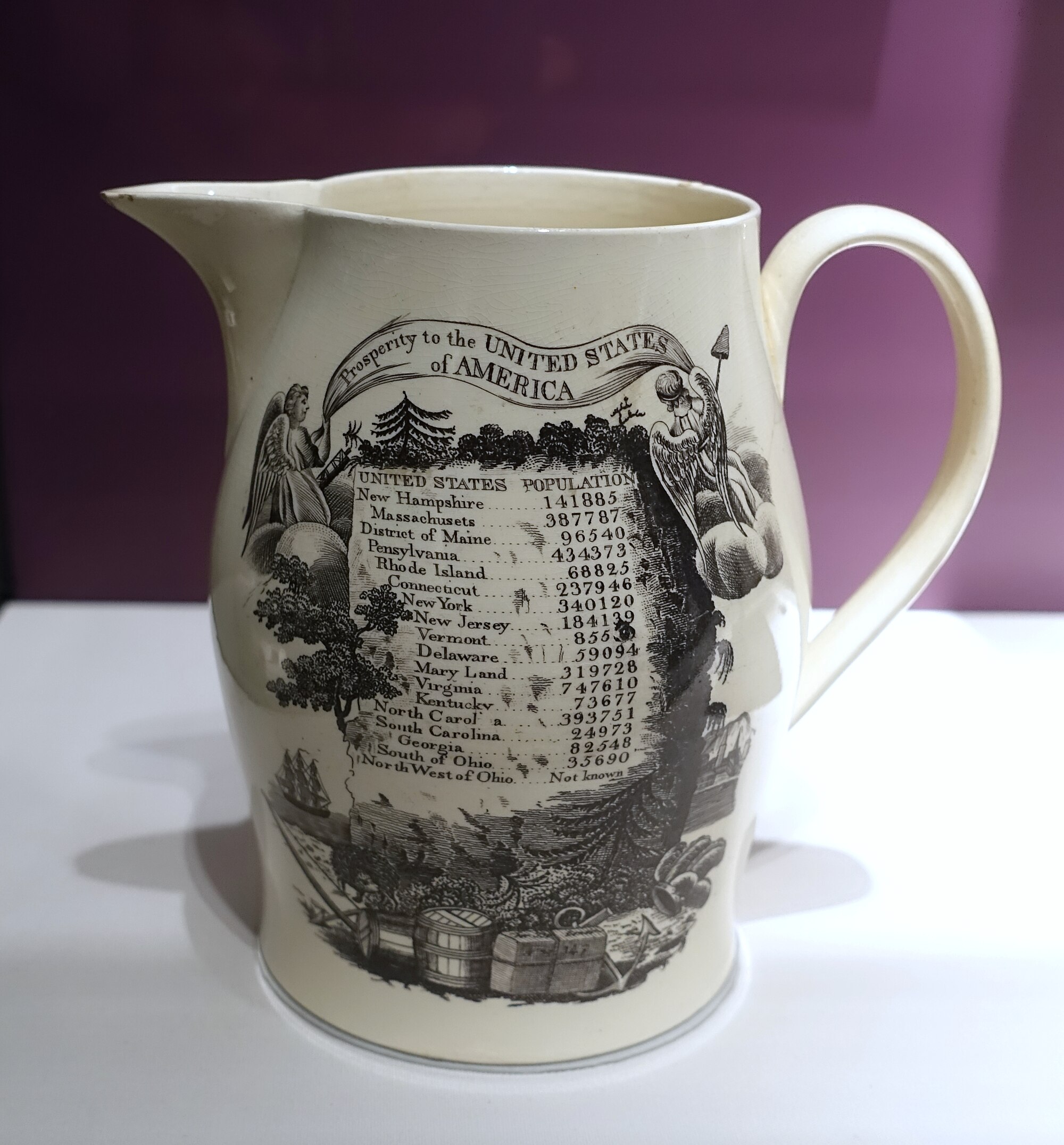
A pitcher that was made in England showing the population of the United States in 1790. On August 2, 1790, the first U.S. Census was conducted.
The very first U.S. Census was a logistical nightmare orchestrated by none other than Secretary of State Thomas Jefferson. Rather than filling out forms online or mailing documents, federal marshals had to travel by foot or horseback across rugged, unmapped terrain. They carried dynamic, hand-ruled notebooks to count every resident in the original thirteen states plus the Southwest Territory.
The counting process highlighted the deep legal and social divides of the early Republic. Under the young U.S. Constitution, the marshals were bound by the controversial Three-Fifths Compromise, which counted enslaved individuals as three-fifths of a person for taxation and congressional representation. Meanwhile, Native Americans were completely excluded from the tally unless they paid taxes, revealing the messy, exclusionary framework of early American democracy.