
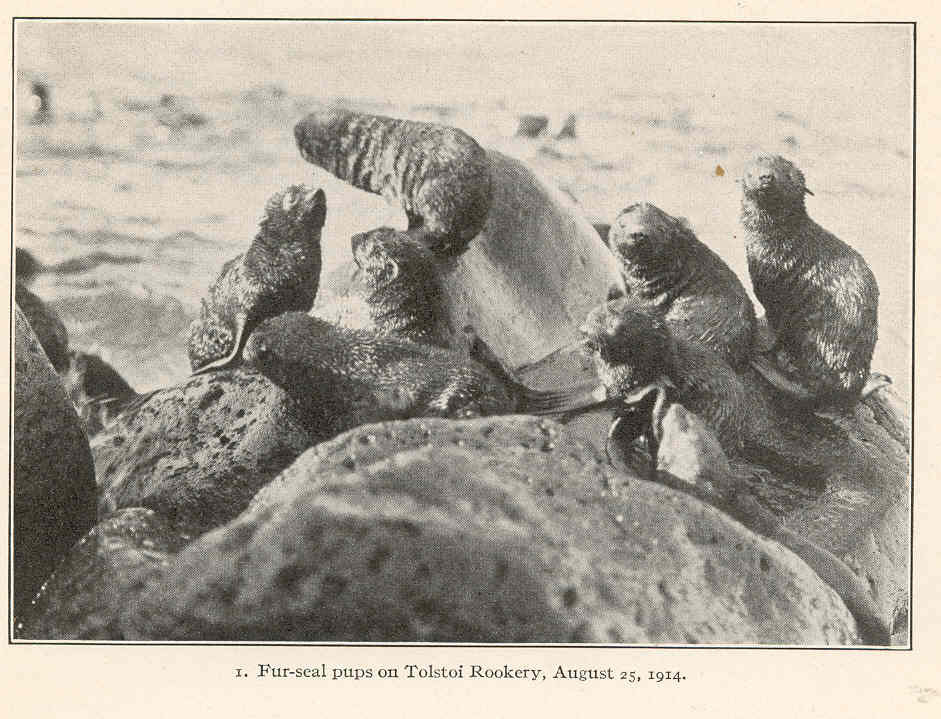
A documentary photograph taken on August 25, 1914, shows a quiet cluster of northern fur seal pups resting along the volcanic shoreline of the Tolstoi Rookery on St. Paul Island, Alaska. The image was produced during the U.S. Bureau of Fisheries’ annual field season, part of a long‑running federal effort to monitor the Pribilof seal population through systematic counts, rookery mapping, and behavioral observation.
By 1914, the Bureau’s work had taken on heightened urgency. Decades of pelagic sealing — the open‑ocean hunting of seals by foreign vessels — had severely reduced herd numbers across the North Pacific. Following the 1911 international Fur Seal Convention, federal biologists were tasked with verifying population trends and ensuring that the new protective measures were working. Their observations helped maintain strict limits on on‑island harvesting and provided the data needed to stabilize a species central to the region’s ecological and economic life.
The photograph captures a moment of stillness within a landscape defined by scientific vigilance. Its stark contrast between wildlife and volcanic terrain reflects an early era of federal conservation, when field notes and images became essential tools for managing marine resources in the far north. Today, the snapshot stands as a clear record of the United States’ first sustained attempt to protect a threatened marine mammal through coordinated, data‑driven stewardship.
Image via Wikimedia Commons, public domain in the U.S.