
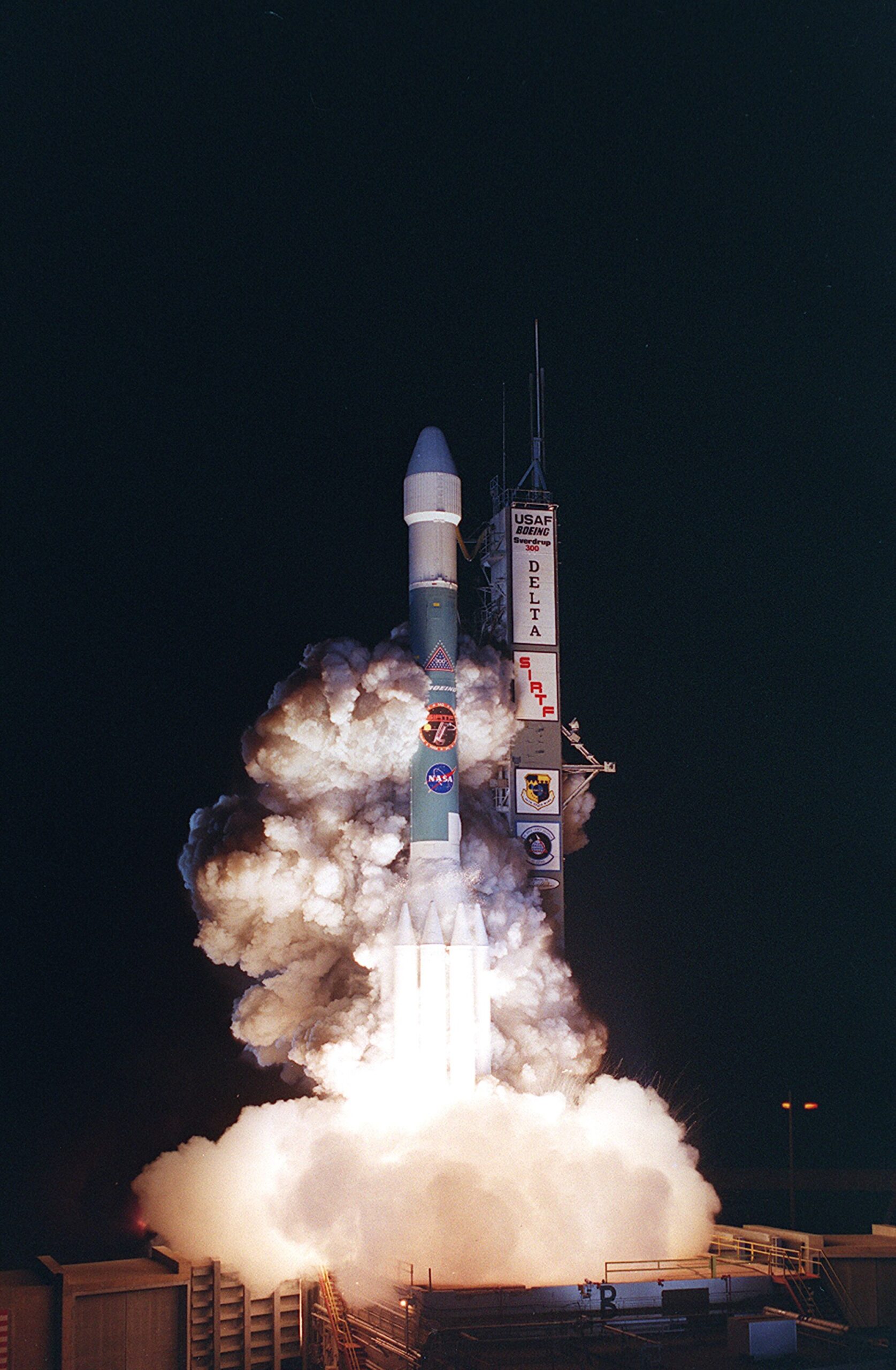
On August 25, 2003, NASA launched the Spitzer Space Telescope into an Earth‑trailing heliocentric orbit, opening a new era of infrared astronomy. The milestone occurred exactly 394 years after Galileo Galilei presented his early refracting telescope to Venetian officials on August 25, 1609, a moment that helped ignite the scientific revolution.
By operating far from Earth’s atmospheric interference, Spitzer was engineered to detect faint infrared emissions from celestial objects that optical telescopes cannot see. Its instruments allowed astronomers to peer through dense interstellar dust, observe the formation of stars and planetary systems, analyze molecular chemistry in deep space, and—most famously—capture the first direct light from an exoplanet in 2005.
Spitzer’s mission far exceeded expectations. Designed for a 2.5‑year primary mission, the spacecraft operated for more than sixteen years before its deactivation in January 2020. Over that span, its data reshaped scientific understanding of galactic structure, planetary atmospheres, and the thermal signatures of distant worlds.
Together, Galileo’s 1609 demonstration and Spitzer’s 2003 launch bookend nearly four centuries of astronomical progress. One introduced humanity to telescopic observation; the other revealed an invisible universe of heat, dust, and emerging stars—proof of how modern engineering continues to expand the cosmic frontier.
Image via Wikimedia Commons, public domain.
