
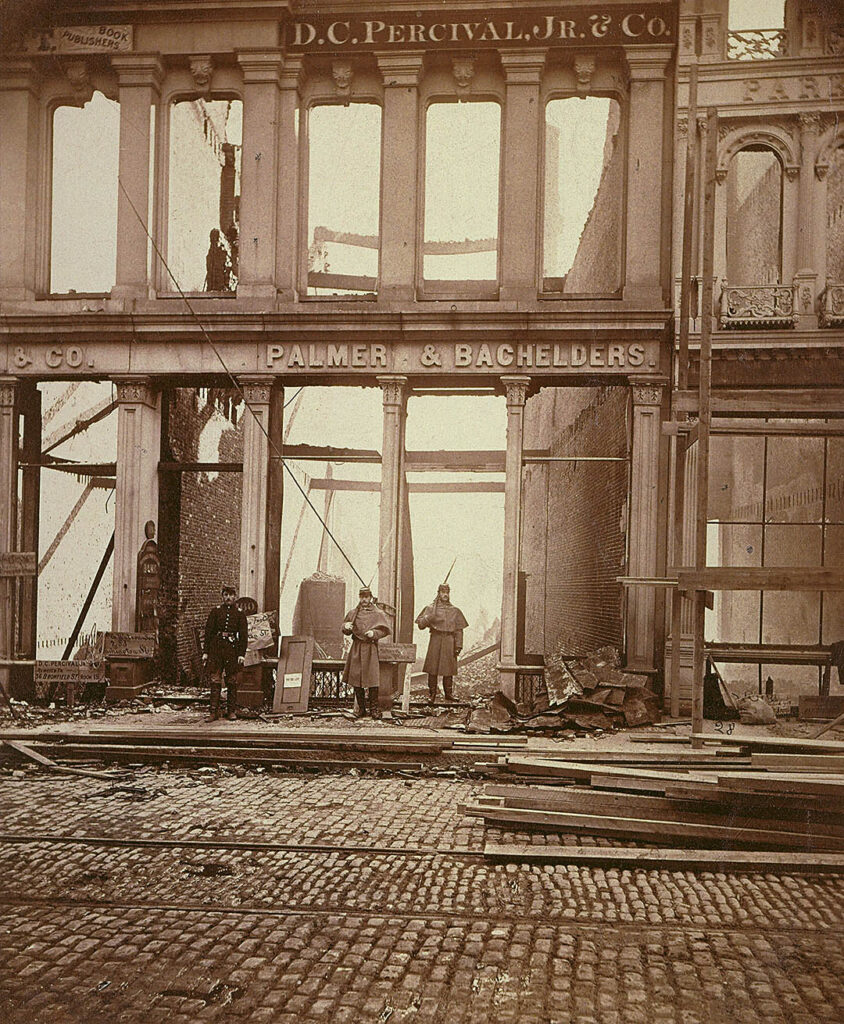
On the evening of November 9, 1872, a fire broke out in the basement of a commercial building on Summer Street in Boston, Massachusetts. Over nearly twenty hours, it devastated sixty-five acres of the city’s commercial district and destroyed 776 buildings. Estimates of the death toll vary, but the scale of the physical and economic destruction is clear: a large portion of downtown lay in ruins, with thousands of people left without homes or work.
The disaster exposed weaknesses that the district’s imposing architecture had concealed. Many buildings had brick or stone walls but combustible wooden components, while wooden mansard roofs helped flames spread above the streets. Inadequate water infrastructure hampered firefighting, and an equine influenza epidemic had disabled horses used to pull the department’s heavy equipment, forcing firefighters to haul engines themselves. Attempts to demolish buildings with gunpowder added another hazardous and controversial element to the response.
Boston’s rebuilding brought changes to both construction rules and the commercial district’s layout. A new building code and a more spacious rebuilt district reflected lessons drawn from the destruction. The surviving photographs of ruined streets offer a stark illustration of the disaster’s central contradiction: a city built to project permanence had proved vulnerable to failures in the systems that protected it. Its granite and brick were only as secure as its roofs, water supply, and firefighting capacity.
