
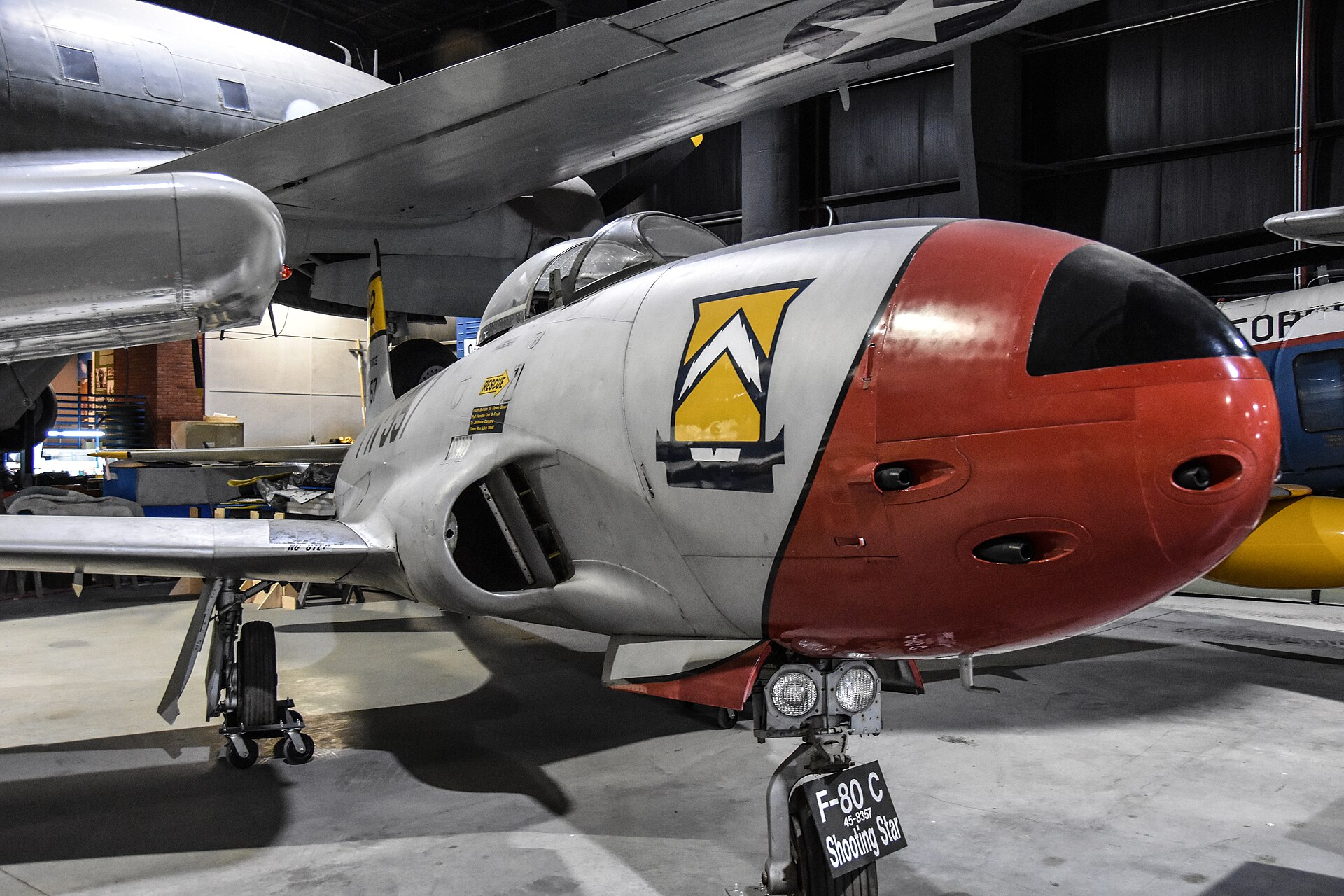
On November 8, 1950, First Lieutenant Russell J. Brown engaged a MiG-15 near Sinuiju, North Korea, in an encounter celebrated as the first jet-to-jet aerial victory. Flying a Lockheed F-80C Shooting Star with the 16th Fighter-Interceptor Squadron, 51st Fighter-Interceptor Wing, Brown pursued the Soviet-built fighter in a steep dive and reported destroying it. The United States Air Force officially credited him with the victory, securing his place in the early history of jet combat.
The appearance of the MiG-15 over Korea that November challenged the United Nations forces’ control of the skies. Faster than the straight-wing F-80, the swept-wing fighter presented American pilots with a formidable opponent. The United States responded by deploying F-86 Sabres, setting the stage for the air battles associated with “MiG Alley.” Brown’s encounter came during this transition, as pilots confronted the capabilities—and dangers—of a new generation of combat aircraft.
Later accounts citing Soviet records have questioned whether the MiG Brown engaged was destroyed. Those accounts offer a different interpretation of the encounter, but Brown’s victory remains officially credited in the Air Force’s historical record. A careful telling distinguishes that documented American recognition from the continuing uncertainty over the opposing aircraft’s fate.
The engagement’s significance extends beyond the question of a single aircraft’s loss. Brown and his fellow pilots were adapting to a rapidly changing air war, facing an opponent whose performance challenged their equipment and tactics. November 8 remains a milestone in that story: an early encounter between jet fighters that helped define a new era of aerial combat.
Image: F-80C “Shooting Star, photo by Eric Friedebach
