
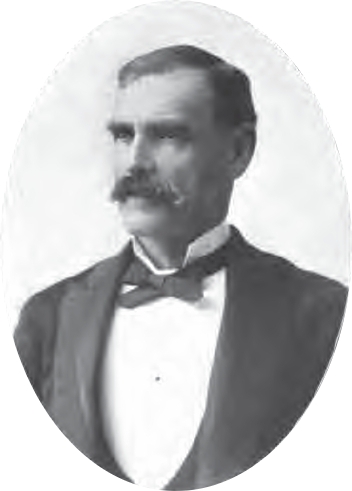
Alexander Oswald Brodie’s path to Arizona’s territorial governorship ran through West Point, frontier cavalry service, and the battlefields of Cuba. A graduate of the United States Military Academy in 1870, he later joined the 1st United States Volunteer Cavalry—the Rough Riders—during the Spanish-American War. Serving as a major alongside Theodore Roosevelt, Brodie was wounded in the right wrist at the Battle of Las Guasimas on June 24, 1898. He subsequently returned to the regiment and was promoted to lieutenant colonel.
Appointed governor by President Roosevelt, Brodie took office in Phoenix on July 1, 1902. His administration confronted labor disputes, demands for infrastructure, and the continuing struggle over Arizona’s political future. He advocated changes to mining taxation, supported an eight-hour workday for miners, and pursued improvements in education and federally assisted irrigation. His economic program combined calls for mining companies to contribute a fairer share of taxes with incentives intended to encourage new transportation and power projects.
The proposal to combine Arizona and New Mexico into a single state became a major controversy during his governorship. Brodie initially endorsed a joint-statehood measure, but his position changed. In his 1905 legislative address, he reported strong opposition among Arizona residents and urged lawmakers to resist the merger. The legislature subsequently expressed its opposition to Congress.
Brodie resigned on February 14, 1905, and returned to the U.S. Army as a major, continuing his military career until retirement in 1913. His governorship linked the Rough Riders’ wartime generation with a consequential period of territorial reform and debate over Arizona’s future.