
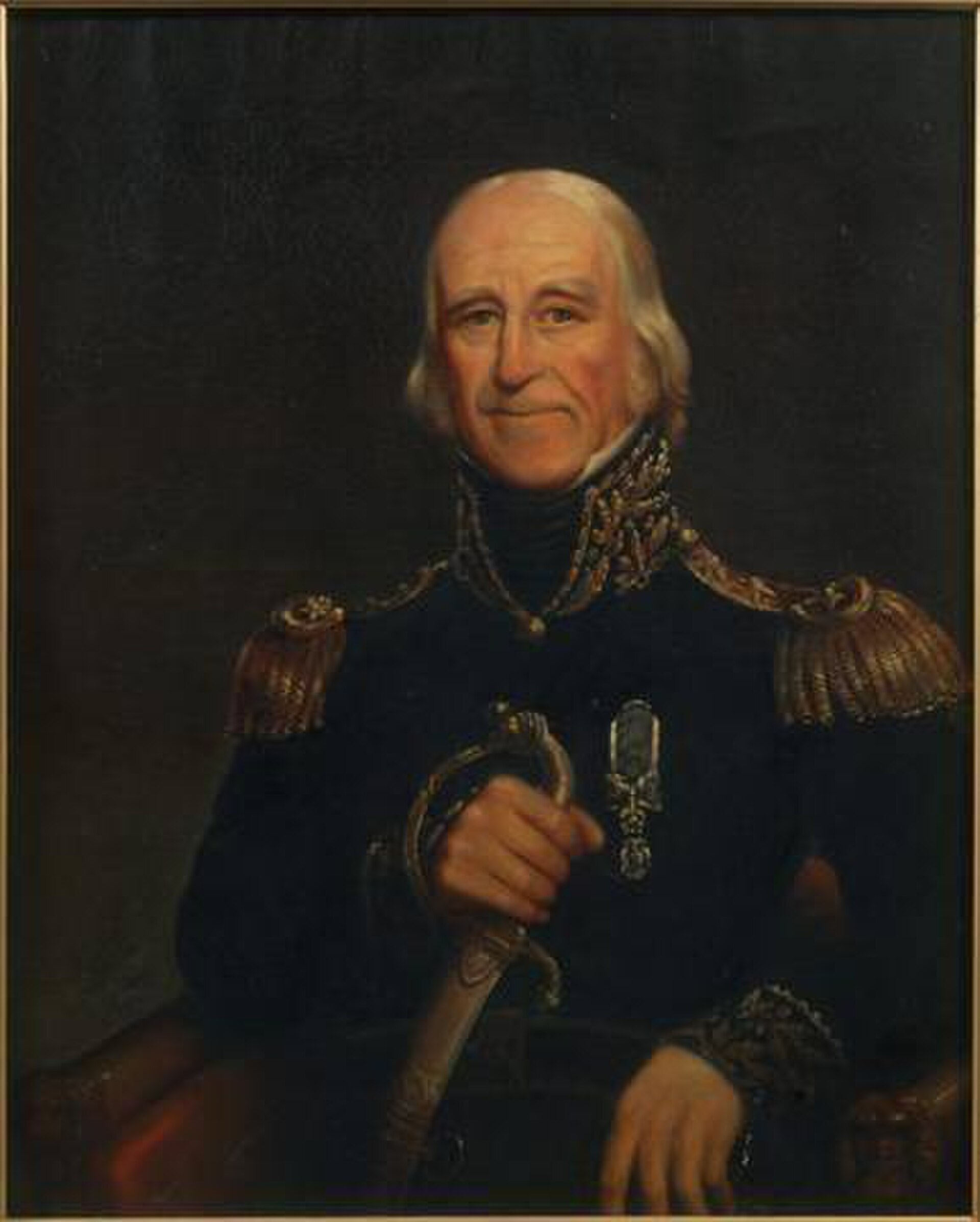
Morgan Lewis was born on October 16, 1754, in New York City, the son of Francis Lewis, a future signer of the Declaration of Independence. Educated at the College of New Jersey—now Princeton University—he began studying law before the Revolutionary War redirected his life toward military and public service.
Lewis joined the Continental Army, where his administrative ability brought rapid responsibility; he became Quartermaster General of the Northern Department. On October 17, 1777, one day after his twenty-third birthday, he stood at Saratoga as chief of staff to General Horatio Gates and received the surrender of General John Burgoyne’s army—a decisive turning point in the war.
After independence, Lewis returned to public life. He served as New York’s attorney general, then as an associate justice and chief justice of the state Supreme Court, building a reputation for legal ability and public trust. In 1804, he was elected governor of New York, defeating Vice President Aaron Burr.
As governor, Lewis proposed dedicating proceeds from the sale of state public lands to education. The Legislature adopted the measure, creating a foundation for New York’s public school fund. He later returned to military service during the War of 1812, serving as U.S. quartermaster general and rising from brigadier to major general. His career linked the Revolution, the early republic’s legal institutions, and New York’s commitment to public education.
