
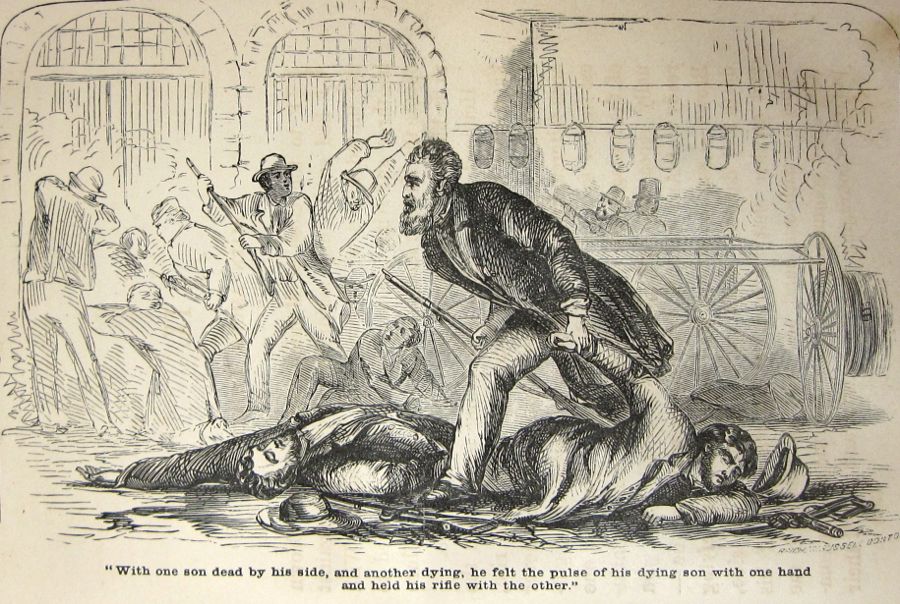
On the evening of October 16, 1859, radical abolitionist John Brown led a small band of armed supporters in a raid to seize the federal armory and arsenal at Harpers Ferry, Virginia. Driven by his uncompromising opposition to slavery, Brown intended to capture the weapons stored there, retreat into the nearby mountains, and spark an armed uprising against slavery across the South. Three of Brown’s sons took part in the operation, including Oliver and Watson, both of whom would be mortally wounded.
The raid quickly collapsed. Local citizens and militia surrounded the armory, trapping Brown and several followers in the fire engine house. On October 18, U.S. Marines under Colonel Robert E. Lee stormed the building, ending the standoff after roughly thirty-six hours. Oliver Brown was killed during the fighting; Watson died of his wounds the following day.
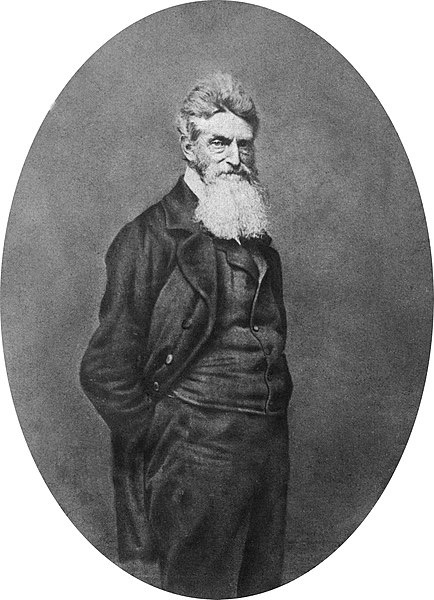
The failed raid intensified the national crisis over slavery and became one of the immediate precursors to the Civil War. Brown was tried by Virginia for murder, treason against the Commonwealth, and inciting a slave insurrection. Convicted on all counts, he was hanged on December 2, 1859. His execution transformed him into a polarizing martyr—condemned in much of the South, mourned and revered by many abolitionists in the North.
