
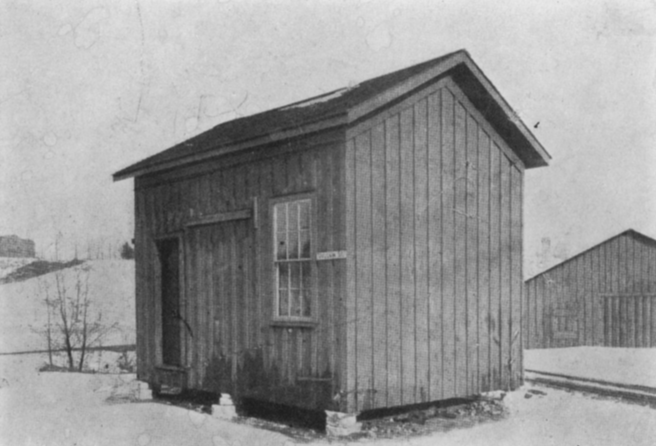
On September 30, 1882, the Vulcan Street Plant began operating on the Fox River in Appleton, Wisconsin. It became the first Edison hydroelectric central station to serve private and commercial customers in North America, demonstrating that water power could generate electricity for practical, organized lighting service.
The project was driven by Henry J. Rogers, president of the Appleton Paper and Pulp Company and the Appleton Gas Light Company. Inspired by Thomas Edison’s plans for a steam-powered central station in New York, Rogers and local backers installed an Edison “K” type dynamo in the Appleton Paper and Pulp Company mill. Initial testing on September 27 failed, but the system operated successfully three days later.
Powered by the Fox River through a waterwheel and a system of belts and gears, the dynamo produced about 12.5 kilowatts—enough to illuminate two paper mills and Rogers’s nearby home, Hearthstone. The station opened only 26 days after Edison’s Pearl Street Station in New York began operating, but unlike Pearl Street, Vulcan Street used water rather than steam as its prime mover.
Vulcan Street did not invent hydropower, nor did it immediately transform the nation’s electrical system. Its significance was more specific: it proved that an Edison-style central lighting system could be driven by a river, linking established water-power technology to the emerging business of electric generation and distribution.
Image credit: The original central station building of the Vulcan Street Plant, documented in The Wisconsin Magazine of History (1922), via Wikimedia Commons, public domain.
