
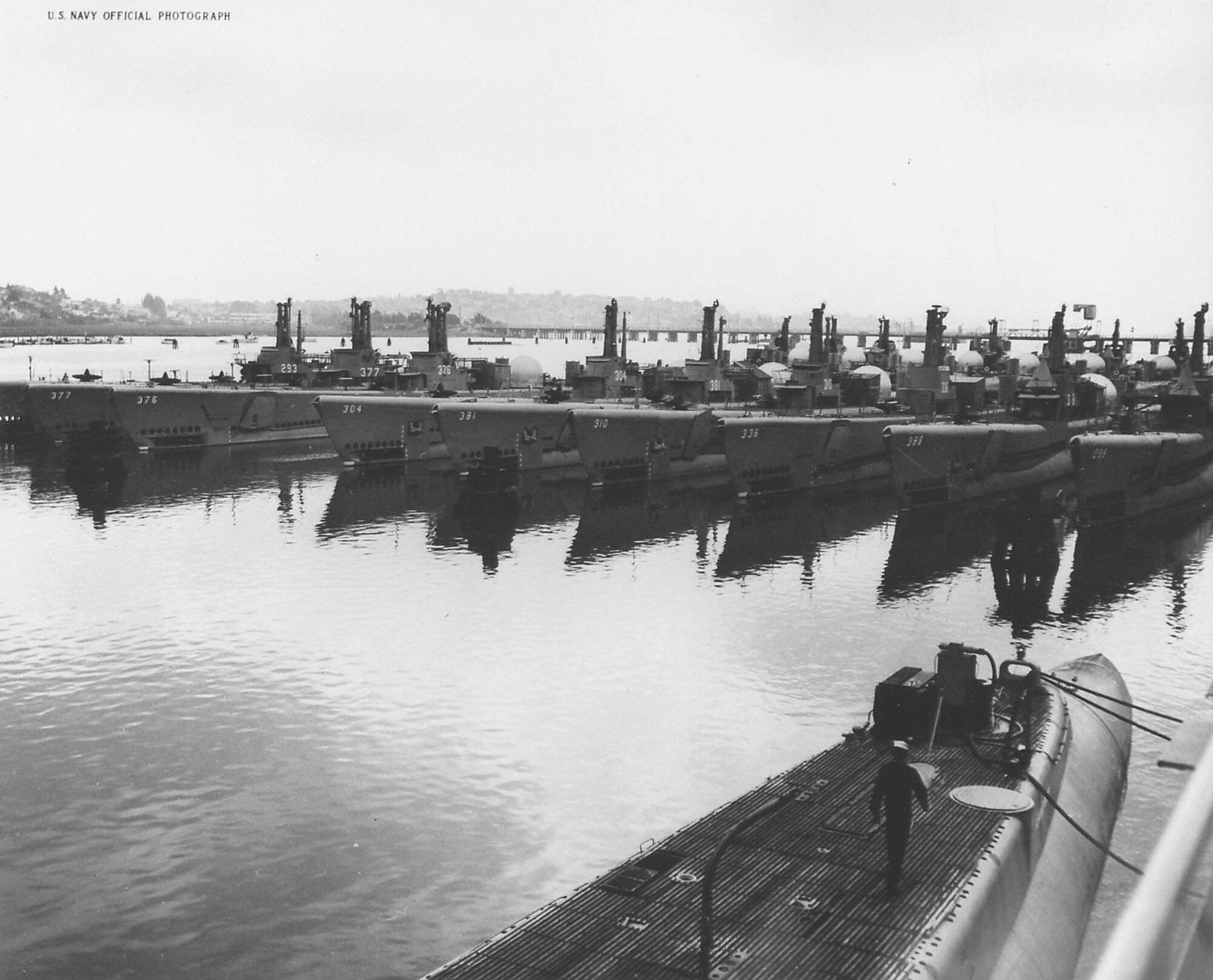
On September 28, 1950, archival photography captured rows of decommissioned and mothballed U.S. submarines resting quietly in the Reserve Fleet at Mare Island Naval Shipyard in Vallejo, California, on the Napa River northeast of San Francisco. During World War II, Mare Island was a major submarine construction and repair center, building and servicing vessels that helped disrupt Japan’s maritime supply lines across the Pacific.
After the war ended in 1945, the U.S. Navy rapidly reduced its active fleet and personnel. Large numbers of wartime ships were placed in reserve, preserved at varying levels of readiness for possible future service. By the time this photograph was taken, however, the international situation had changed dramatically. The Korean War, which began in June 1950, intensified fears that a regional conflict might widen into a broader confrontation between the United States, its allies, and the Soviet bloc.
The submarines at Mare Island were therefore more than remnants of the last war: they represented a stored reserve of naval power at the opening of the Cold War. In the early 1950s, the Navy recommissioned and modernized many World War II-era fleet submarines through the Greater Underwater Propulsive Power—GUPPY—program. These upgrades improved underwater speed, endurance, and stealth through streamlined hulls, increased battery capacity, and snorkel systems. Modernized boats later served in training, patrol, surveillance, and intelligence missions throughout the Cold War.
Image: Moored submarines at the Mare Island Reserve Fleet, September 28, 1950. Via Wikimedia Commons; public domain.
