
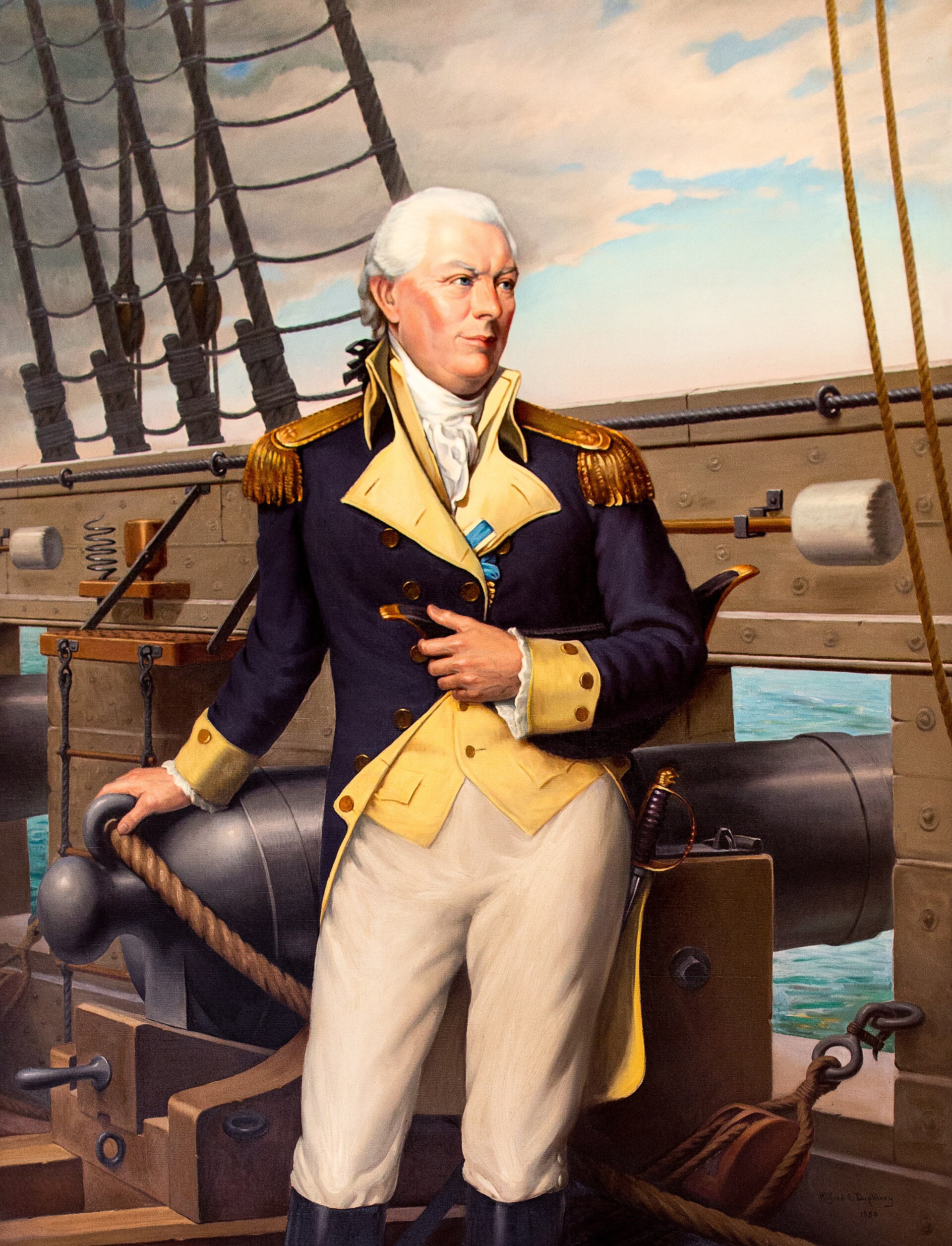
On September 13, 1803, Commodore John Barry—one of the most important naval figures of the early American republic—died in Philadelphia at the age of 58. Born in County Wexford, Ireland, in 1745, Barry came to Philadelphia as a young man and built a successful career at sea before offering his service to the revolutionary cause.
During the Revolutionary War, Barry commanded several Continental Navy vessels, including the brig Lexington and the frigate Alliance. He earned a reputation as an aggressive and capable commander, achieving important early naval successes against British shipping. In March 1783, aboard Alliance, he fought the engagement with the British warship Sybylle that is commonly regarded as the final naval action of the American Revolution.
When Congress established the new United States Navy in 1794, Barry stood first on its list of captains. President George Washington issued him Commission No. 1 on February 22, 1797, with seniority dated to June 4, 1794. As commander of the first U.S. naval squadron, he was customarily known as commodore and is widely regarded as the Navy’s first flag officer.
Barry was also remembered for his concern for the sailors under his command and for the younger officers he helped develop. That influence led many contemporaries and later writers to call him the “Father of the American Navy,” although the title is also associated with other early naval leaders, particularly John Paul Jones. His death closed a remarkable life of Irish immigrant achievement, Revolutionary service, and devotion to the maritime defense of his adopted country.
Image via Wikimedia Commons, public domain
