
On September 8, 1952, Ernest Hemingway’s The Old Man and the Sea was published in book form by Charles Scribner’s Sons. Its arrival followed an extraordinary debut in the September 1 issue of Life magazine, which printed the complete novella and sold a record 5.3 million copies in two days—restoring Hemingway to the center of American literary conversation.
The novella follows Santiago, an aging Cuban fisherman, as he undertakes a grueling solitary struggle with a giant marlin far out in the Gulf Stream. From that spare maritime story, Hemingway fashioned a lasting meditation on endurance, dignity, pride, and the human capacity to persist even when victory proves impossible.
Written in Hemingway’s famously economical style—often associated with his “iceberg theory”—the work places its emotional force in action, observation, and the rhythms of the natural world rather than overt explanation. Santiago’s ordeal gives the book its enduring force, culminating in its best-known conviction: “A man can be destroyed but not defeated.”
The Old Man and the Sea became both a critical and commercial success. It won the Pulitzer Prize for Fiction in 1953, and it was specifically cited when Hemingway received the Nobel Prize in Literature the following year. The novella remains one of his most widely read works and a defining twentieth-century American story of survival and resilience.
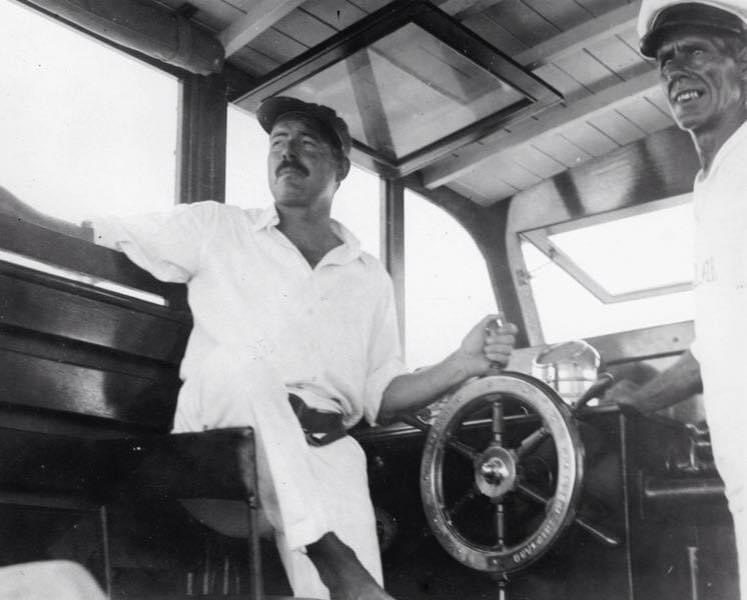
Image: Ernest Hemingway and Carlos Gutiérrez aboard the Pilar, Key West, 1934. John F. Kennedy Library; public domain.
