
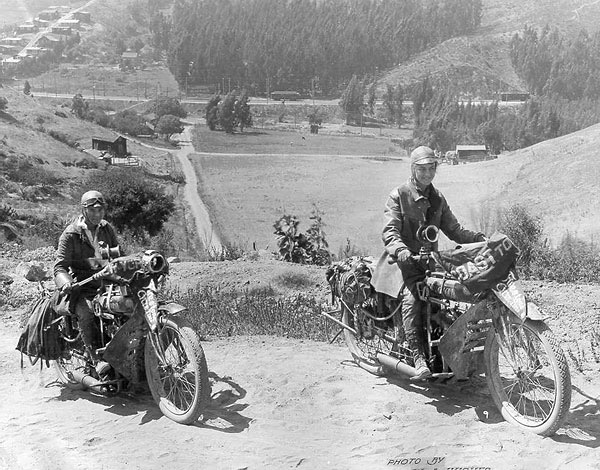
On September 8, 1916, pioneering motorcyclists Augusta and Adeline Van Buren arrived in Los Angeles, California, completing a landmark journey in American transportation and women’s history. Riding Indian Powerplus motorcycles, the sisters had traveled roughly 5,500 miles across the country in 60 days, departing Brooklyn, New York, on July 4.
Their transcontinental expedition had a clear political purpose: to prove that women possessed the stamina, mechanical ability, and navigational skill to serve as military dispatch riders during World War I. They faced primitive and often unpaved roads, mud, desert conditions, severe weather, breakdowns, and widespread public scrutiny for wearing practical leather riding breeches and military-style leggings.
In Colorado, Augusta and Adeline became the first women to reach the 14,109-foot summit of Pikes Peak by motor vehicle. Their ride demonstrated extraordinary endurance and technical independence at a time when women’s mobility and public roles were sharply constrained.
Although the Army did not accept their effort as a path to service as dispatch riders, the Van Buren sisters created an enduring public precedent. Their journey challenged entrenched assumptions about women’s competence, courage, and independence, securing their place in both motorcycle history and the broader struggle for women’s equality.
Image via Wikimedia Commons; public domain in the United States.
