
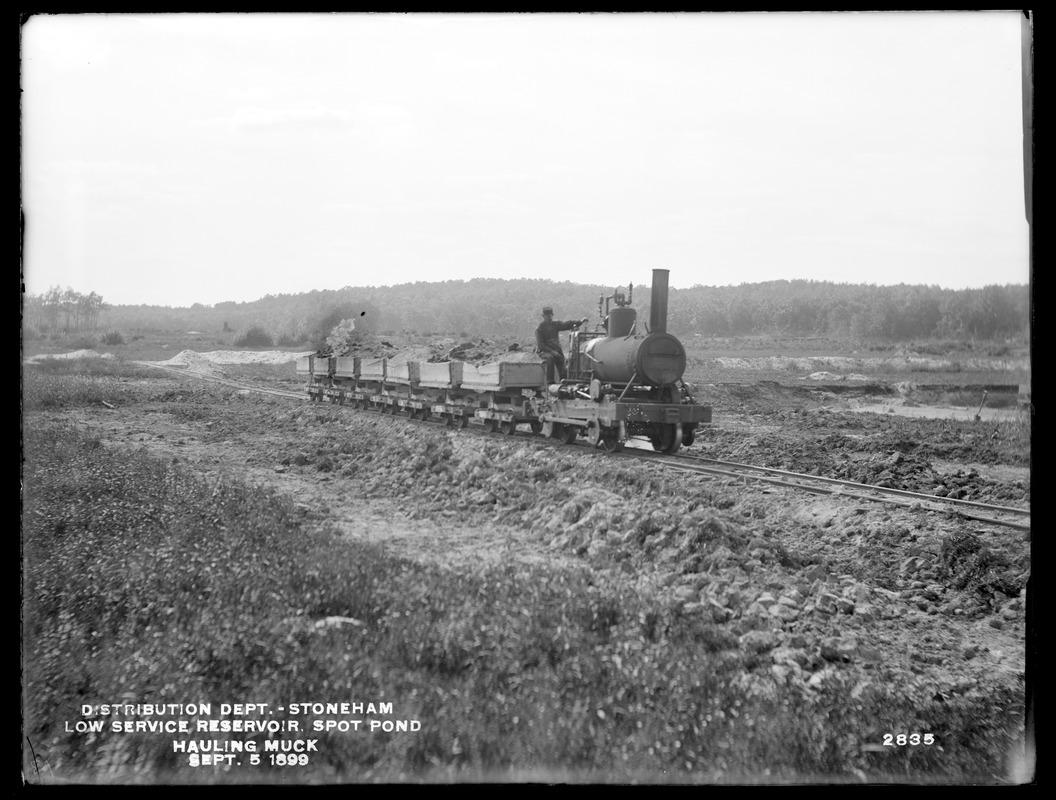
On September 5, 1899, an industrial photograph captured workers using a small steam locomotive to clear muck from the south basin of the Low Service Spot Pond Reservoir in Stoneham, Massachusetts. The scene shows the coordinated mechanical and manual work required to deepen the basin, remove organic debris, and reshape the landscape during a major period of municipal development.
The excavation formed part of a state-led expansion of the metropolitan water system, intended to provide the fast-growing Boston area with a cleaner, more reliable public water supply. As Spot Pond was developed into a major distribution reservoir, crews removed accumulated silt and vegetation to improve water quality and increase usable storage capacity.
Before diesel-powered and highly automated excavation equipment, projects of this scale depended on temporary rail lines, steam machinery, and large crews of laborers. The photograph offers a vivid record of the practical engineering behind late-nineteenth-century public-health infrastructure—and of the often-unseen workers who helped build the sanitary systems that made modern urban growth possible.
Image via Digital Commonwealth of Massachusetts; no known restrictions.
