
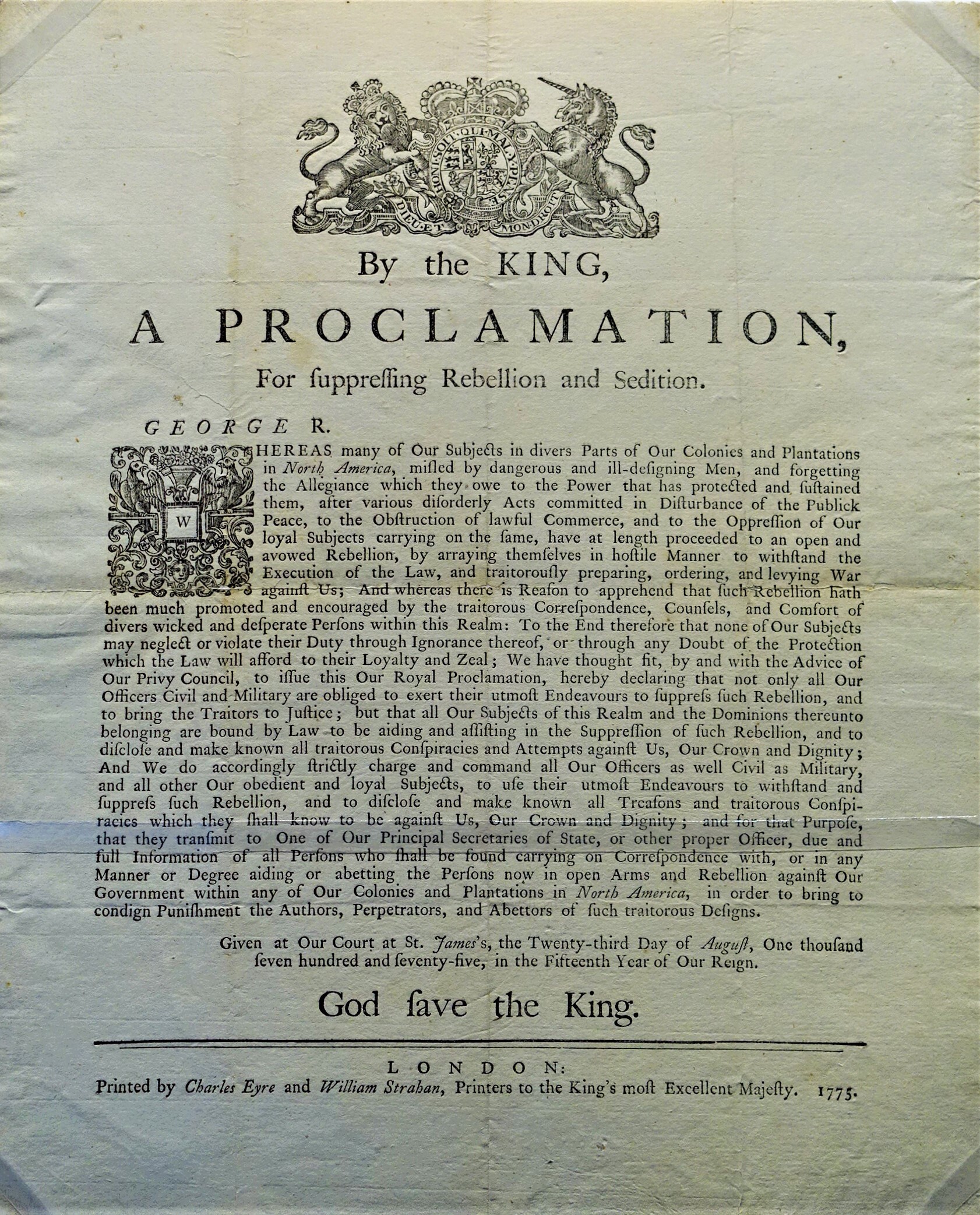
On August 23, 1775—King George III issued the Proclamation of Rebellion. Blood had already been spilled at Bunker Hill, and the colonies had just made their final appeal for peace, but the King rejected negotiation, branded resistance as treason, and declared loyal subjects enemies of the Crown.
The royal decree, officially titled the Proclamation for Suppressing Rebellion and Sedition, established a critical legal boundary line that fundamentally closed the door on any potential diplomatic compromise. By declaring that the American colonies were actively being misled by dangerous conspirators, King George III authorized imperial administrators and military forces to bring a swift, iron-fisted end to the civil unrest. This sweeping mandate transformed colonial merchants, local assemblymen, and continental soldiers from disgruntled British subjects into active traitors against the Crown, punishable by immediate execution and total asset forfeiture.
Months later, the Continental Congress responded with words as sharp as any musket, defiantly stating, “Allegiance to Parliament? We never owed—we never owned it.” They firmly insisted their resistance was not an unprovoked rebellion, but a necessary defense of inherited constitutional rights, declaring, “We condemn, and with arms in our hands… we oppose the claim and exercise of unconstitutional powers.” In trying to crush a movement, the King’s proclamation ultimately gave it form, shifting a localized civil dispute into an all-out war for total separation.
Image from Joyofmuseums – CC BY-SA 4.0 via Wikimedia Commons
