

Did you know that a woman wrote a history of the American Revolution published in 1805 under her own name, Mrs. Warren? This remarkable woman’s three-volume account of the rise, progress and termination of the revolution recounts more than just the facts. She tells the story with heart, knowing many of the principal actors personally. You’ve read history, this is HER story.
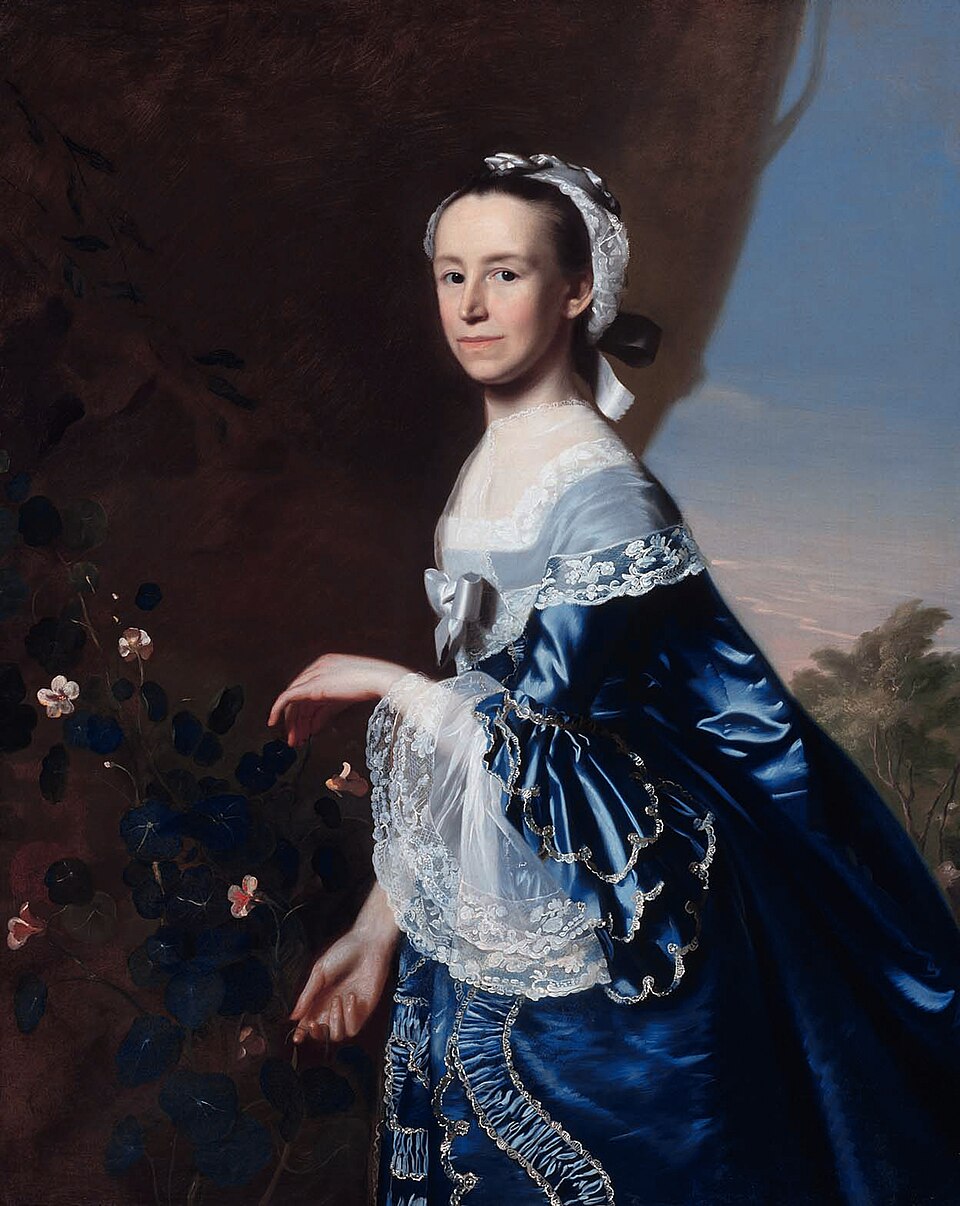
Young Mercy and her two older brothers were educated by a tutor hired by their father who valued education, even for his daughter, something not ordinary at that time. She was schooled in the classics and carried on intellectually with her brother, her friends, and eventually her husband James Warren who also valued her intellect.
Mercy’s brother was James Otis, the brilliant lawyer who wrote the argument against the Writs of Assistance, where the colonists were required to provide lodging for the royal troops when needed. Remember that phrase, “no taxation without representation”? That was the argument he made and the sentiment spread throughout the colonies. He debated the patriotic position until one night when he was ambushed in a Boston pub and badly beaten resulting in a head injury, ending his legal career and public speeches.
Mercy (Marcia to her family and friends) wrote a poem that was widely published in colonial newspapers, titled The Squabble of the Sea Nymphs. Today we would say it went viral. Everyone loved this poem. Here’s what you may not know. This poem inspired the Boston Tea Party, right down to the native costumes and tomahawks, marching to the wharves, bursting open the containers of tea, and dumping them into the ocean.
In her history book, her account of this inciting event begins with the revenue acts which were repealed except for a small duty on all India teas. She explains that it was kept reserving Great Britain’s claim that it could tax the colonies at will whenever it thought expedient.
It was her friend, John Adams, who first suggested she pick up the patriotic propaganda role when her brother was injured. She wrote her first poem at his bidding, and he delivered it to the Boston Gazette, and from there it spread everywhere, becoming enormously popular. Of course she published it anonymously, along with her other political satires, also widely published. Her writing may not have had the same impact if it was known that a woman wrote it, unfortunately.
She was a prolific letter writer, something many engaged in at that time. News was shared by letter. Among her pen pals were many of the principals of the revolution, and her home in Barnstable Massachusetts was often the meeting place where strategies and plans were made. She was intricately involved from the beginning and kept notes which later helped her compose her history book.
I’ve been studying this remarkable woman for nearly thirty years. There are many books that talk about her, some biographies, and she is referred to as a Founding Mother by authors like Cokie Roberts.
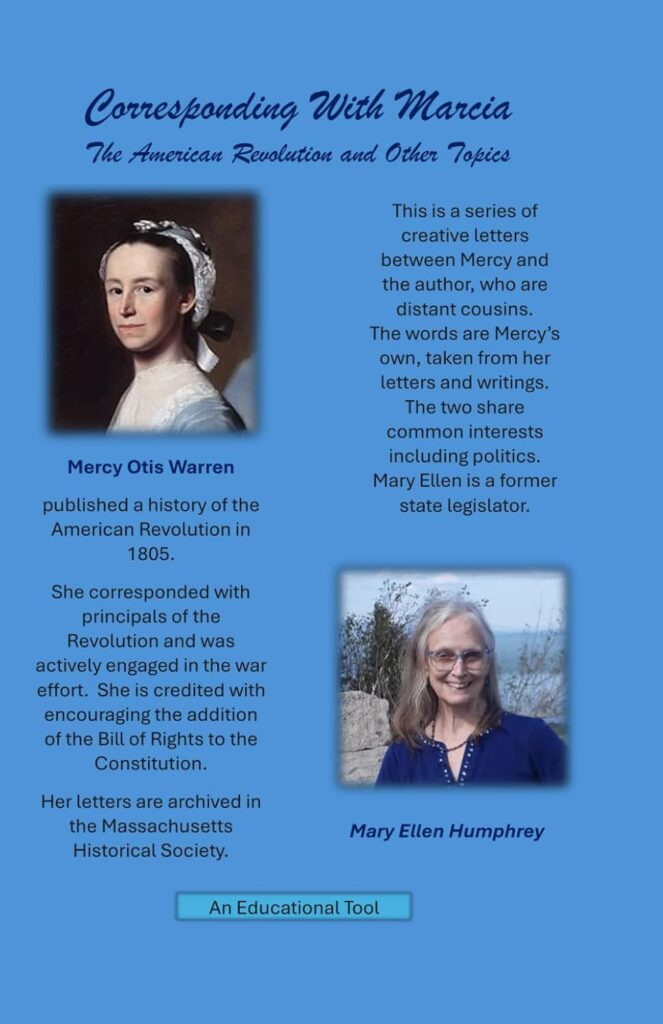
Mercy is my distant cousin, her great-great grandfather John Otis is also my great grandfather ten generations back. I wanted to write a book about her, but I did not want to re-hash what’s already been said. In her history of the revolution, she said she wanted to “speak to posterity, perhaps very far remote.” That inspired me to create a book using her own words to create a correspondence between herself and myself, so she can tell the story of the revolution as if to a friend or relative, along with discussing other topics.
Corresponding With Marcia is that book. I learned so much from this amazing woman and now see the revolution in a new light. The words are hers, and the history she recounts is from her perspective, as an active participant.






Leave a Reply