
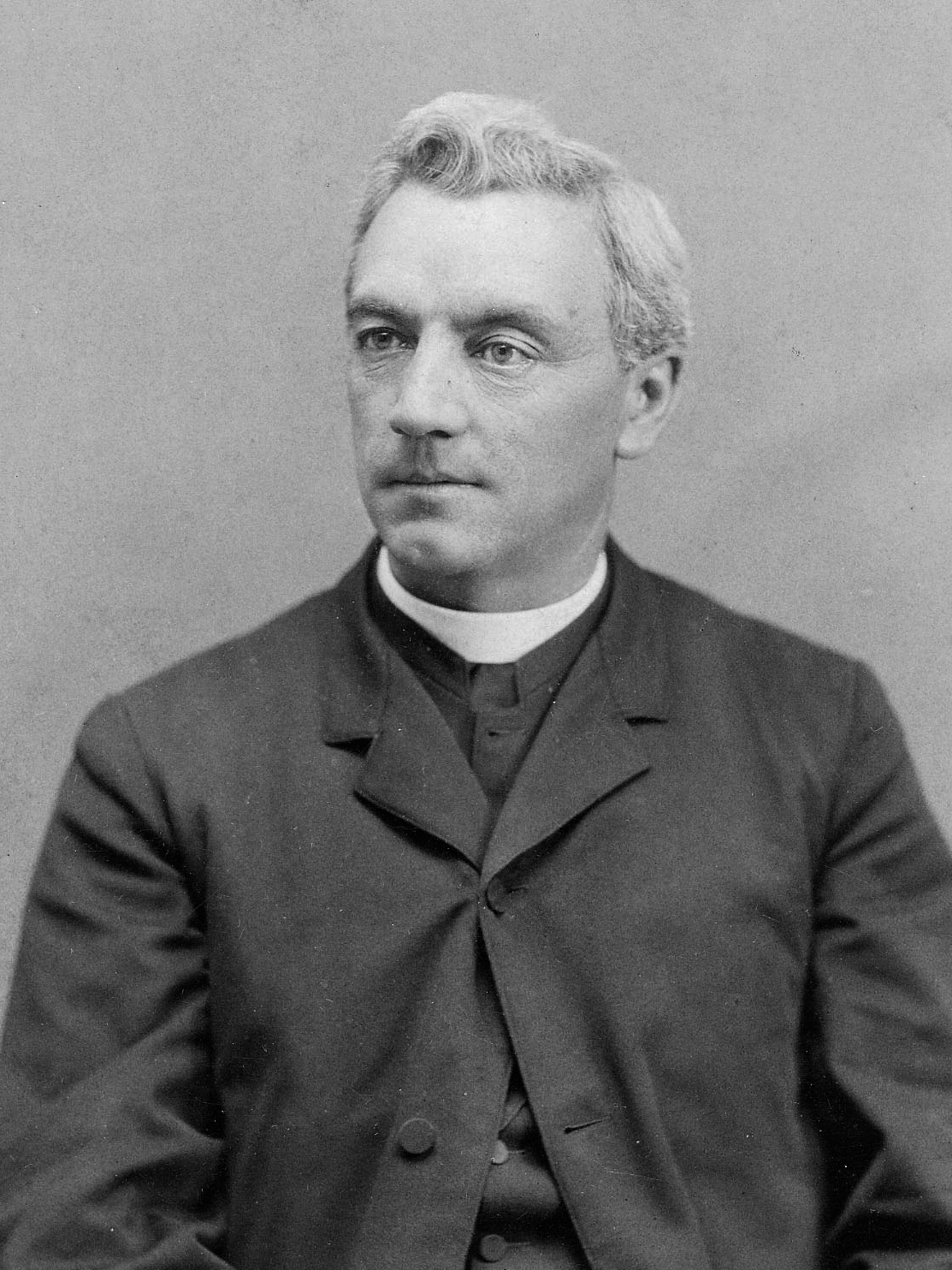
Inaugurated on July 31, 1874, Father Patrick Francis Healy, S.J., became president of Georgetown University and soon set in motion a transformation that would reshape its physical and intellectual landscape. His vision culminated in the construction of Healy Hall (1877–1879), a soaring Neo-Gothic landmark designed by Paul J. Pelz and John L. Smithmeyer, architects of the Library of Congress. Built of Potomac gneiss and crowned with a 200-foot spire, the hall reoriented the campus toward the city, signaling Georgetown’s emergence as a national institution. Inside, Riggs Library and Gaston Hall offered cast-iron elegance and ceremonial grandeur, embodying Healy’s belief that architecture could inspire scholarship, dignity, and ambition.
Healy’s leadership guided the university through a critical period of renewal following the devastation of the Civil War. Born into slavery in Georgia to a white planter and a mixed-race mother held in chattel slavery, he pursued his education and religious calling under a complex racial reality, rising to become the first Black American to earn a PhD and lead a prominent American university. His drive to build a grand center for learning was fueled by a desire to create a space where ideas could flourish, establishing an intellectual foundation that would train generations of future leaders.
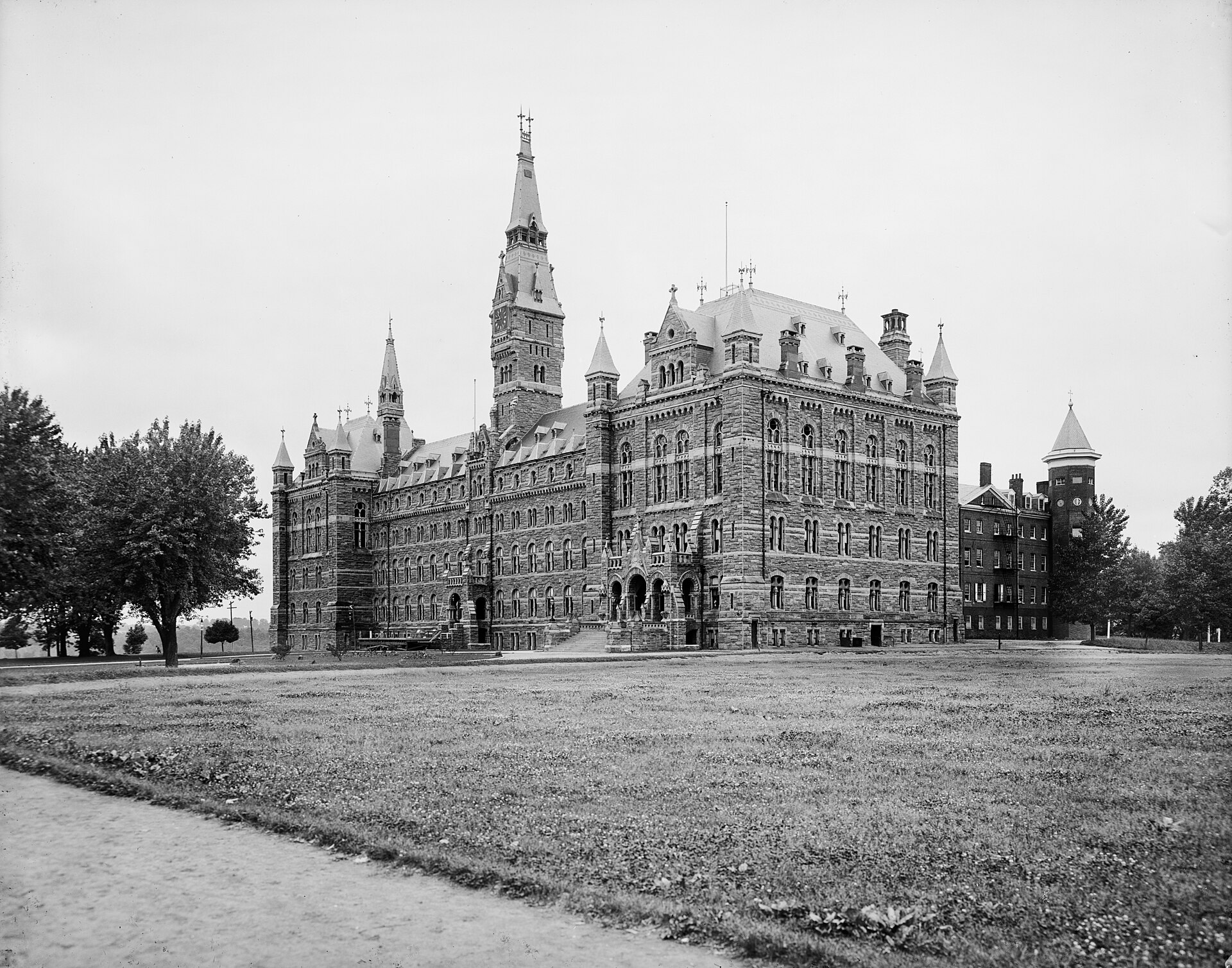
The striking Neo-Gothic architecture of Healy Hall was intended to inspire a sense of wonder and academic purpose in everyone who walked through its doors. By pointing the building toward the heart of Washington, D.C., Healy visually connected the university to the political life of the nation, asserting that faith and learning had a vital role to play in shaping the country’s future. The grand libraries and lecture halls inside provided an ideal setting for deep study, helping to transform a small college into a premier national university.

My daughter and her husband met at Georgetown University.
At their graduation they were so frugal that they shared the robe.
I will always cherish that memory.