
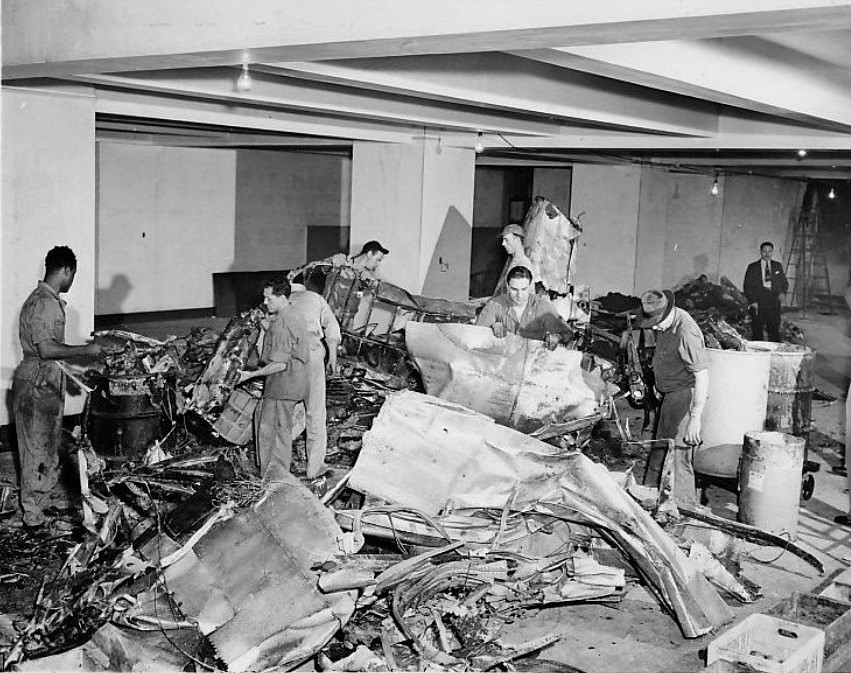
On the foggy morning of July 28, 1945, wartime military aviation tragically collided with civilian architecture in the heart of Manhattan. A U.S. Army Air Forces B-25 Mitchell bomber, lost in a blinding soup of low-hanging clouds, slammed directly into the 78th and 79th floors of the Empire State Building. The violent impact ripped open the skyscraper’s facade, sending high-octane fuel cascading down the corridors and igniting an immediate, infernal blaze high above the city streets.
Workers on the upper floors suddenly found themselves sifting through twisted structural steel and melted office equipment as they tried to comprehend a disaster that felt entirely surreal. The crash claimed fourteen lives—three crewmen and eleven civilians inside the building—and left a metropolis deeply stunned by how easily a weapon of war could breach its iconic skyline. Yet, amid the cascading debris and roaring flames, a quiet miracle emerged from the elevator shafts.
Betty Lou Oliver, a twenty-year-old elevator operator, was severely injured by the initial blast on the 80th floor. As first responders placed her into a separate elevator to evacuate her, the damaged cables snapped, plunging her cab an astonishing 75 stories into the basement. Against all mathematical odds, the severed cables coiled at the bottom of the shaft, acting as a makeshift spring that cushioned the impact. Oliver survived the longest elevator fall in history, a bizarre and enduring testament to human survival amid structural chaos.
