
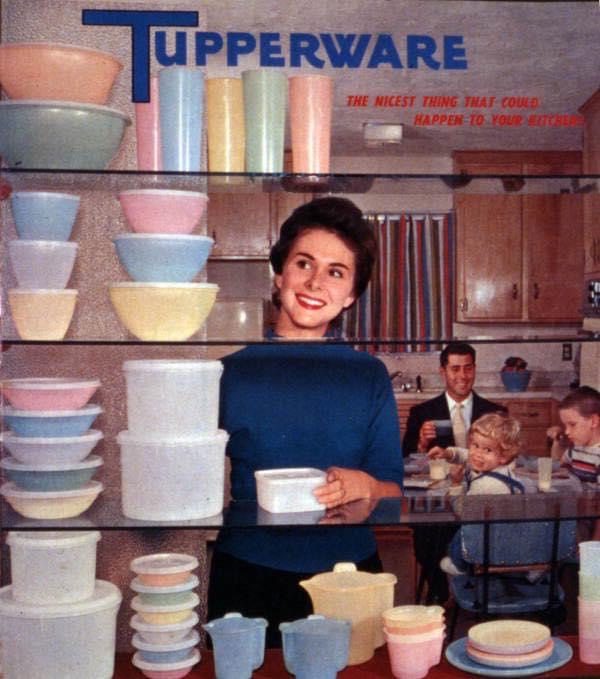
The man who would completely revolutionize the postwar American kitchen, Earl Silas Tupper, was born on July 28, 1907, in the rugged town of Berlin, New Hampshire. Raised in modest circumstances, Tupper was a restless, self-taught inventor who spent his youth dreaming up various gadgets, from innovative fish hooks to bizarre variants of everyday tools. His true breakthrough, however, came during World War II while working as a pioneering chemist for the DuPont chemical company.
Tasked with finding a use for polyethylene slag—a black, oily, foul-smelling byproduct of the oil refining process—Tupper discovered a method to purify the raw material into a flexible, translucent, and completely odorless plastic. He molded this resilient new material into lightweight kitchen bowls, but the true genius lay in his patented airtight closure. Inspired by the design of a simple paint can lid, he engineered a flexible rim that created a vacuum-tight, moisture-proof seal when pressed down, keeping food fresh for unprecedented lengths of time.
Initially, consumers didn’t understand how to use the strange new plastic items on department store shelves. The empire only truly exploded when Tupper partnered with an extraordinary saleswoman named Brownie Wise, who pioneered the concept of home demonstration parties. By pairing Tupper’s innovative engineering with Wise’s brilliant marketing, they transformed an experimental oil byproduct into a multi-million-dollar cultural phenomenon that redefined domestic convenience for mid-century America.
