
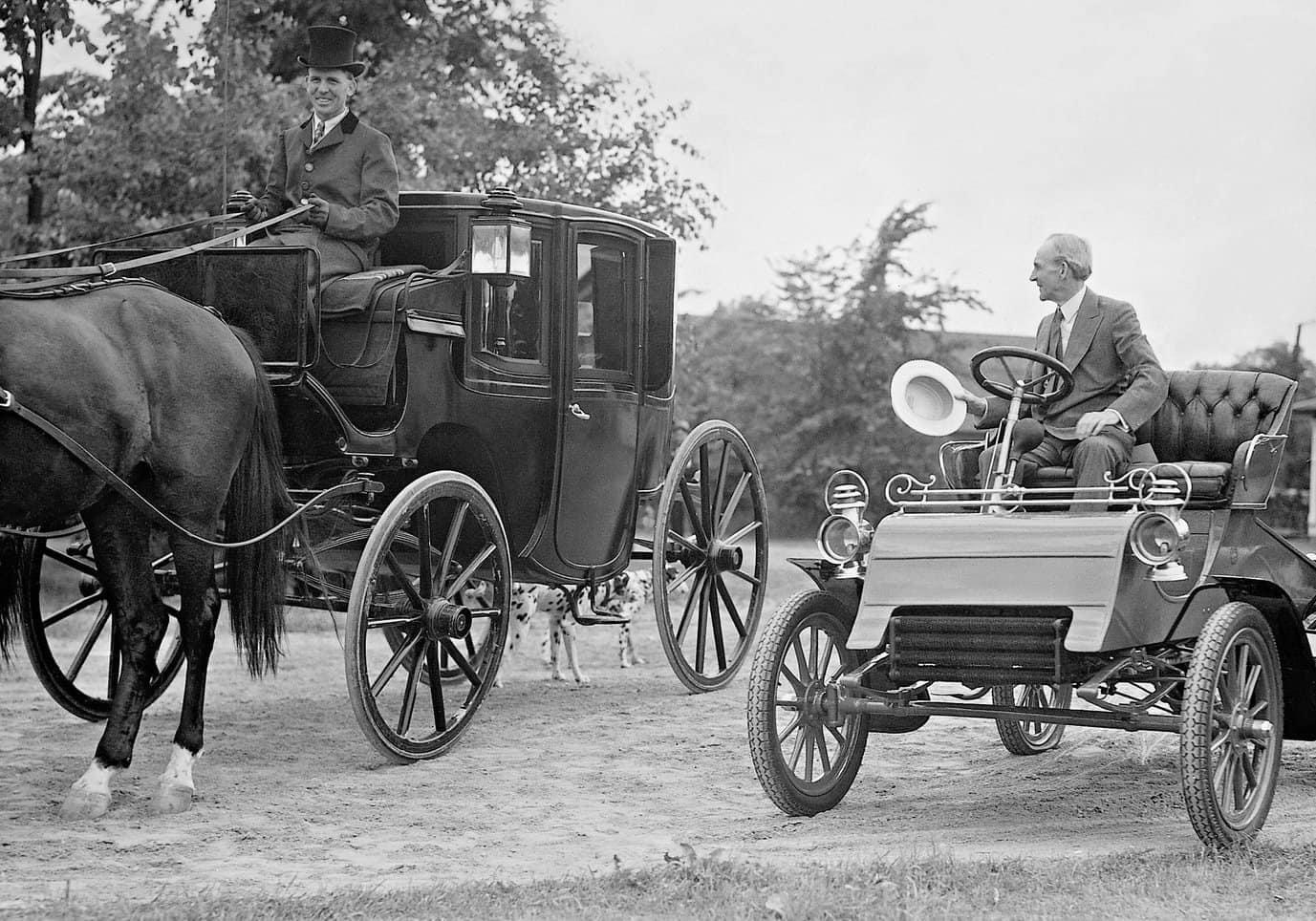
The Ford Motor Company shipped its first commercial vehicle, the Ford Model A, on July 20, 1903 — just over a month after Henry Ford officially founded the business. Three days later, the car arrived in Chicago, where it was purchased by a local dentist, Dr. Ernest Pfennig. This modest transaction marked the quiet beginning of a global automotive revolution that would reshape modern transportation, manufacturing, and urban design.
The shipment came at a moment of near‑catastrophic financial desperation. Ford had burned through almost all of his initial investment capital while developing the prototype, leaving the company’s bank account with less than three hundred dollars just days before the Model A was completed. Pfennig’s payment provided the crucial lifeline that kept the fledgling enterprise alive, allowing Ford to stabilize operations, expand production, and ultimately pioneer the mass‑production assembly line that transformed industrial history.
Image: Henry Ford in 1933, thirty years after his first Model A was shipped, seated in his now‑vintage Ford Model A beside an even more vintage horse and carriage via Alamy