
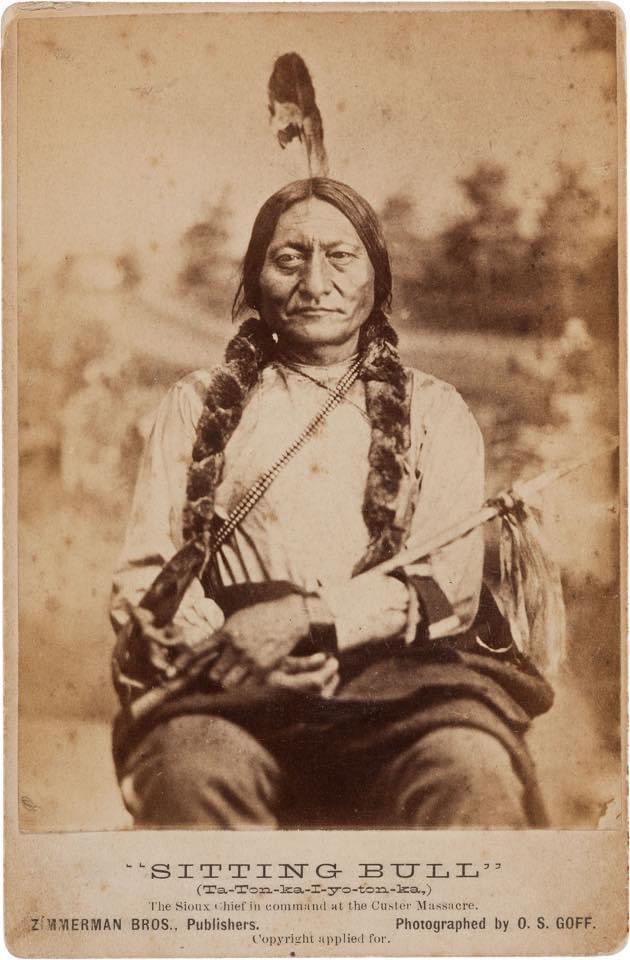
The final act of Sitting Bull’s career as an independent warrior concluded at noon on July 20, 1881, when he walked into Fort Buford and had his young son hand over his Winchester rifle to Major David H. Brotherton. Having led his remaining followers into Canada to escape relentless federal retaliation after the Battle of the Little Bighorn, the devastating depletion of the buffalo herds eventually forced his people into starvation. Dragged down by the suffering of his tribe, the great chieftain crossed back over the international border to surrender, proudly declaring that he wished to be remembered as the last man of his tribe to hand over his weapon.
Sitting Bull deliberately staged this surrender as a symbolic passing of the torch rather than a submissive defeat. By forcing the American military officers to receive the rifle directly from the hands of his small son, the chief was sending a powerful political message about the survival and future resistance of the next generation of Native people. He used his surrender speech to firmly demand that his son be educated in the ways of the white world while explicitly refusing to abandon his spiritual connection to the land, ensuring his final act of military submission was an unyielding plea for cultural survival.
Image: A cabinet card Sitting Bull from 1881 via Wikimedia Commons, public domain
