
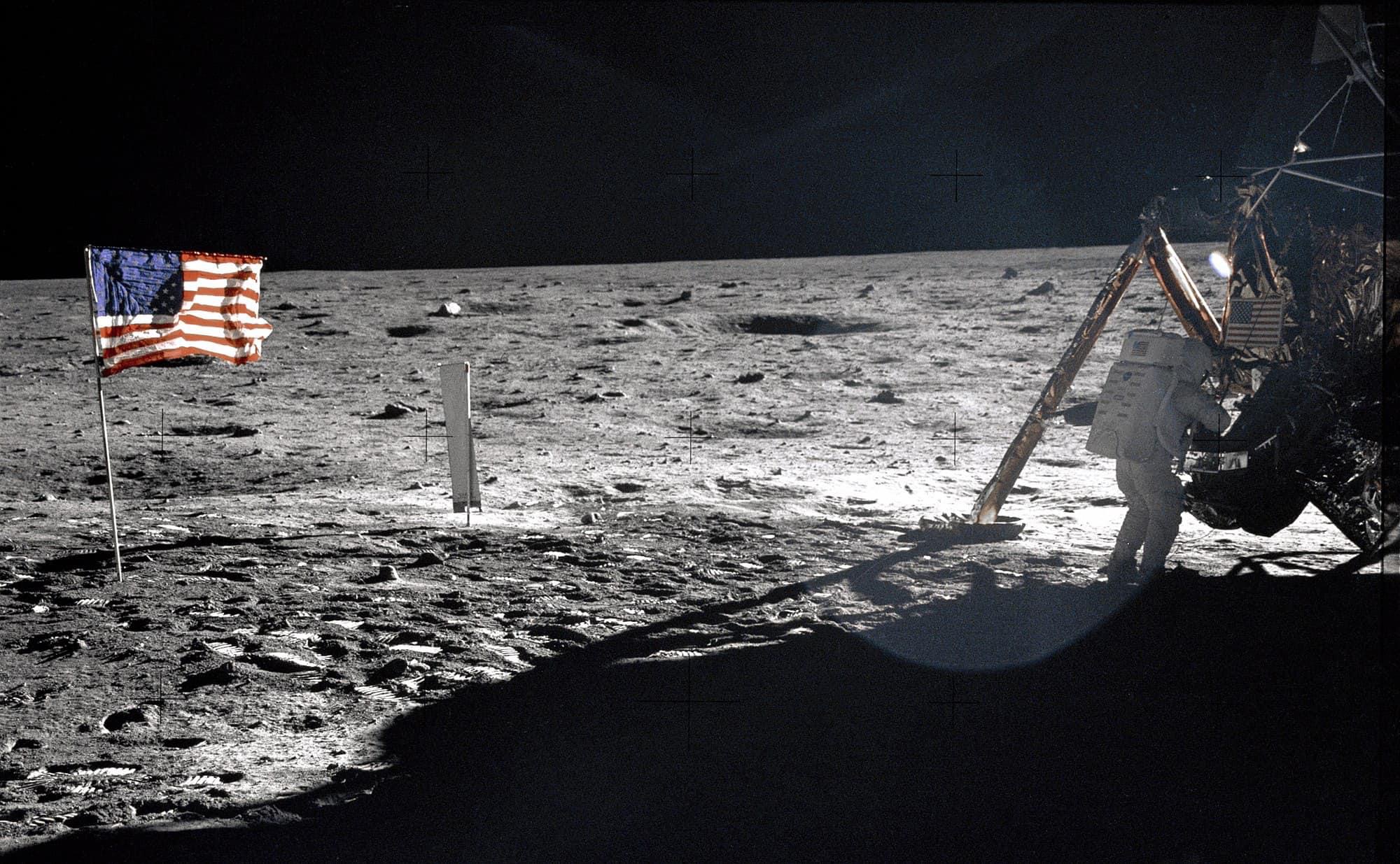
On July 20, 1969, thirty‑eight‑year‑old American astronaut Neil Armstrong stepped off the lunar module ladder and took his historic first steps on the surface of the Moon. His live‑broadcast declaration captivated hundreds of millions of viewers back on Earth, marking the triumphant peak of the global space race and fulfilling the national ambition to land a human on another celestial body before the end of the decade.
The flawless appearance of the moonwalk masked a heart‑pounding crisis that unfolded just moments before touchdown. As the lunar module descended, its primitive onboard computer became dangerously overloaded with radar data, triggering continuous alarms and steering the spacecraft toward a boulder‑strewn crater. With only seconds of fuel remaining, Armstrong manually overrode the automated guidance and skimmed over the hazardous terrain, using his expert test‑pilot instincts to guide the craft to a safe landing — with barely thirty seconds of fuel left in the tanks.
Image via Wikimedia Commons, public domain
