
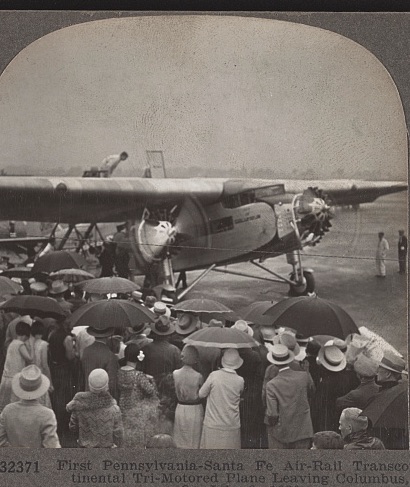
On July 8, 1929, passengers stepped off an overnight Pullman train from New York and boarded Ford Trimotor aircraft in Columbus, Ohio, initiating the first daytime flying leg of America’s new Pennsylvania–Santa Fe air‑rail service. This innovative, multi-stage relay blended daytime aviation with overnight rail travel to safely bypass night flying, allowing travelers to cross the entire continent in a revolutionary 48 hours.
Far from serving as a ceremonial figurehead, Charles Lindbergh played an active technical role in mapping this intricate train-to-plane network. In the months before launch, he personally surveyed the mid-continent airfields, plotted paths around dangerous mountain turbulence, and coordinated the timetables with the railroads, ensuring passengers experienced a reliable journey across the heart of the country.
Image via LOC, no known restrictions
