
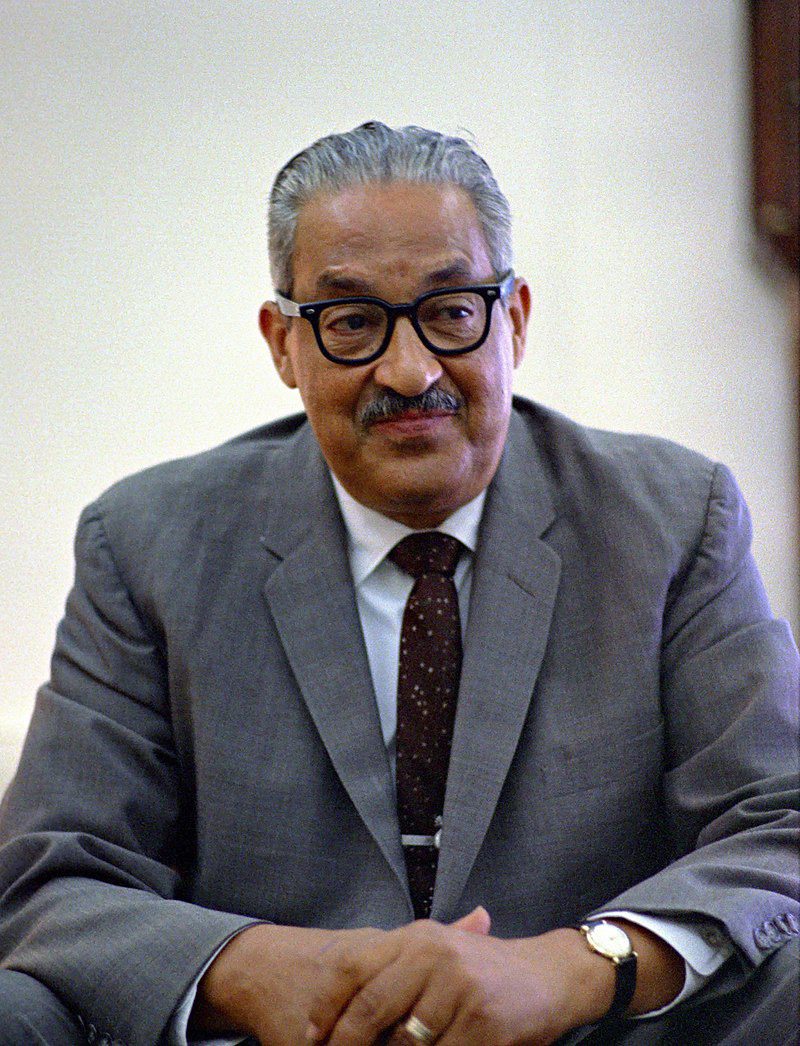
On August 30, 1967, the United States Senate voted 69–11 to confirm Thurgood Marshall as an Associate Justice of the Supreme Court. The vote made Marshall the first African American justice in the Court’s history, breaking a longstanding racial barrier at the highest level of the federal judiciary. President Lyndon B. Johnson had nominated Marshall to succeed the retiring Justice Tom C. Clark.
Marshall arrived at the Court with one of the most consequential legal records of the twentieth century. As a lawyer for the NAACP and the founding director‑counsel of its Legal Defense Fund, he helped lead the decades‑long constitutional challenge to segregation. Most notably, he argued Brown v. Board of Education in 1954, when the Supreme Court held that racial segregation in public schools violated the Constitution.
Before joining the Court, Marshall had also served as a judge on the U.S. Court of Appeals for the Second Circuit and as U.S. solicitor general. His confirmation placed a leading civil‑rights advocate on the nation’s highest court at a pivotal moment in the struggle for racial equality.
During nearly 24 years as a justice, Marshall became a forceful defender of equal protection, individual rights, and fair criminal procedure. He retired in 1991, but his opinions—particularly his dissents—remain central to debates over civil rights and constitutional equality. His confirmation stands as a landmark in American legal history: a moment when the Supreme Court more fully reflected the people whose rights it was charged with protecting.
