
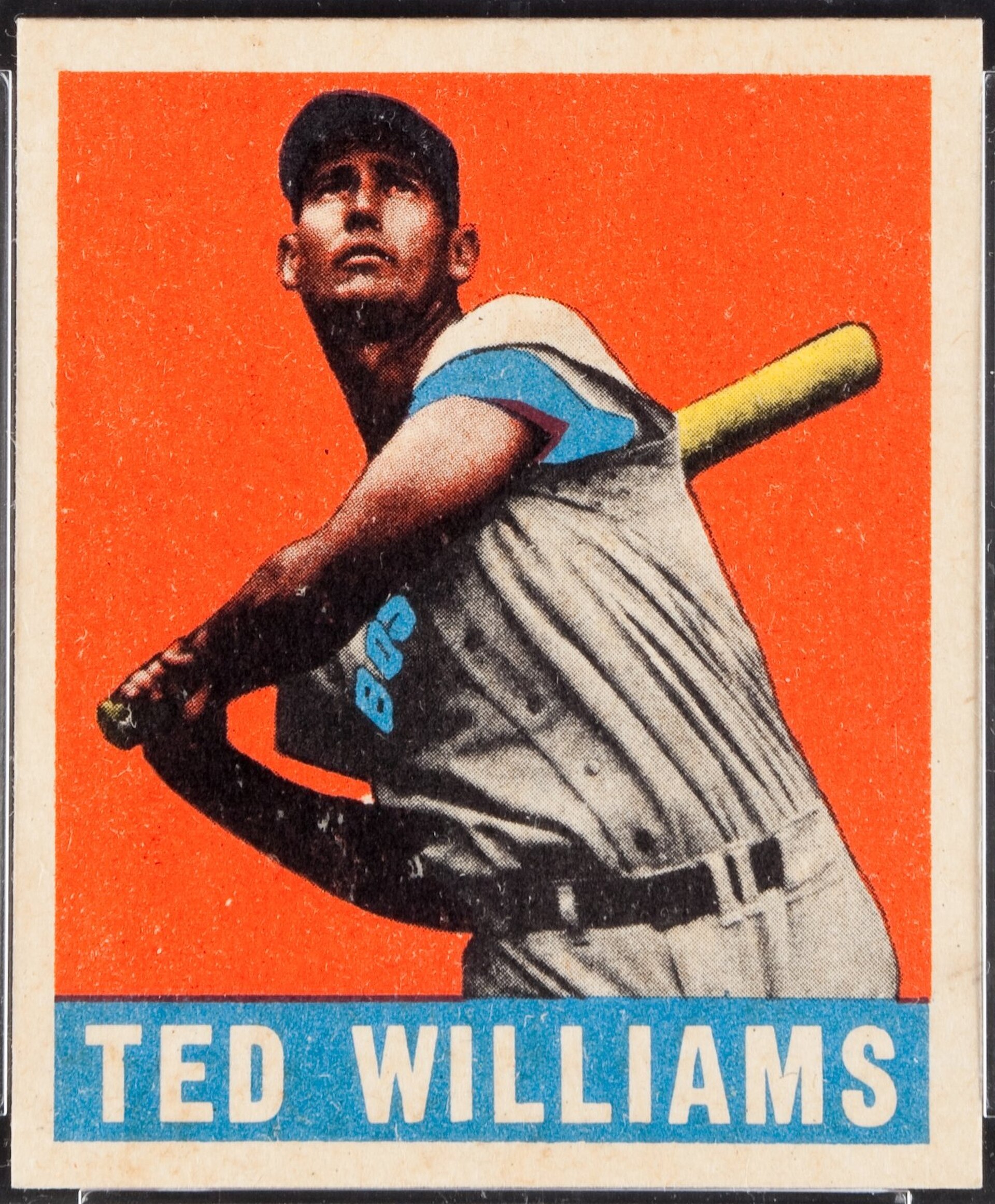
Theodore Samuel “Ted” Williams, the legendary Boston Red Sox hitter and Marine Corps aviator, was born on August 30, 1918, in San Diego, California. Named in part for President Theodore Roosevelt, Williams developed an obsessive attention to the mechanics of hitting from an early age. His extraordinary eyesight, pitch recognition, and relentless study of the strike zone would make him one of the most accomplished hitters baseball has ever known.
Over a 19-season major-league career spent entirely with the Red Sox, Williams won six American League batting titles, earned two Triple Crowns, and became the last player in Major League Baseball to finish a season above .400. In 1941, after choosing to play both games of a season-ending doubleheader rather than protect a rounded-up .400 average, he went 6-for-8 and finished at .406. No MLB player has matched that feat since.
Williams approached batting as both an art and a discipline. His study of swing mechanics, strike-zone judgment, and pitcher behavior later informed The Science of Hitting, a book that became a lasting reference for players, coaches, and fans seeking to understand the craft at a deeper level. His baseball career was interrupted twice by military service; Williams trained as a naval aviator during World War II and later flew 39 combat missions as a Marine pilot in the Korean War, including missions as wingman to future astronaut John Glenn, costing him nearly five full major-league seasons during his prime. Inducted into the National Baseball Hall of Fame in 1966 and awarded the Presidential Medal of Freedom in 1991, Williams remains a singular figure in American sports: a fiercely competitive athlete whose preparation, precision, and devotion to excellence made him a model for generations of hitters.
