
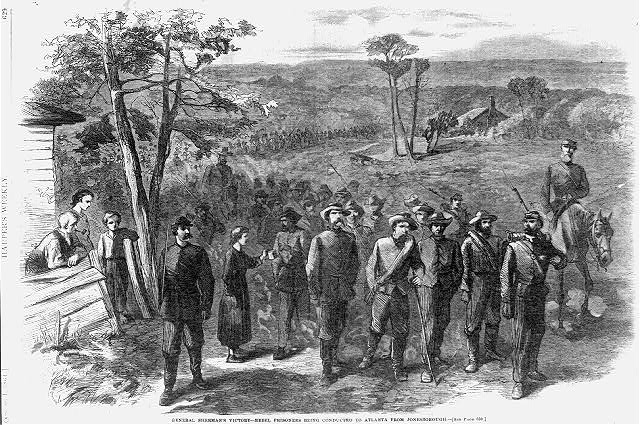
On August 31, 1864, Confederate forces under Lieutenant General William J. Hardee attacked Union troops west of Jonesborough, Georgia, in one of the final battles of the Atlanta Campaign. The struggle grew from General William T. Sherman’s effort to cut the Macon & Western Railroad, Atlanta’s last vital rail connection to the south.
Sherman had shifted six of his seven infantry corps toward the railroads supplying Atlanta. By the end of August, Union forces had reached and damaged the Macon & Western line near Jonesborough. Hardee, sent by General John Bell Hood to stop the movement, attacked two Union corps on August 31. The assaults failed against strong Federal positions, and fighting continued the following day.
The Union victory made Atlanta’s position untenable. On the night of September 1, Hood’s Confederate army evacuated the city, allowing Union troops to formally enter Atlanta on September 2. The capture of the city gave the North a major military and political victory in the autumn of 1864, strengthening confidence in the Union war effort before the presidential election and demonstrating the strategic importance of cutting an army’s logistical lifelines to dictate its surrender.
