
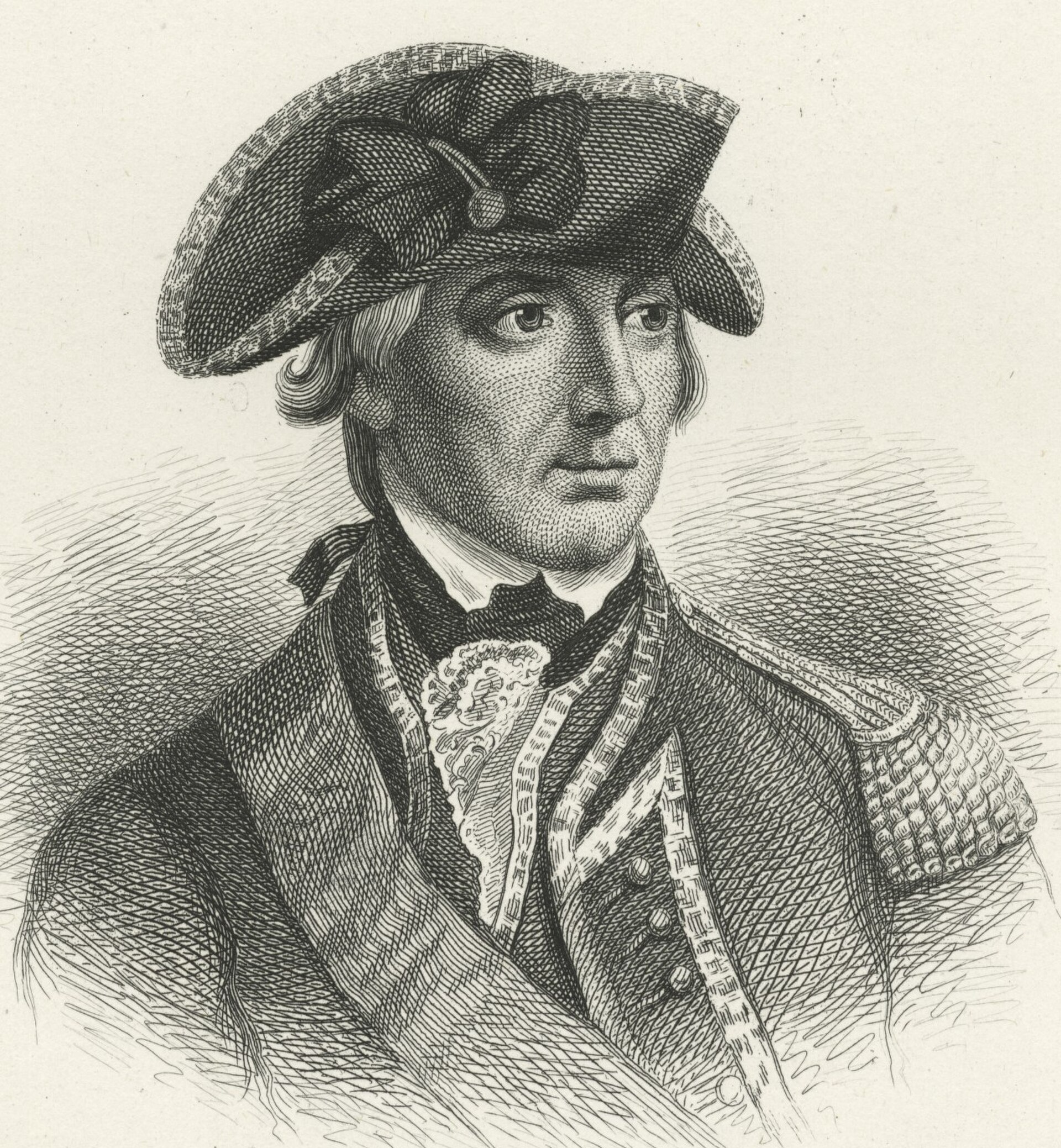
On the night of August 26, 1776, General William Howe (shown) executed one of the most decisive maneuvers of the early Revolutionary War: a disciplined, near‑silent night march through the completely unguarded Jamaica Pass. More than ten thousand British and Hessian troops advanced under full darkness, slipping behind the Continental Army’s eastern flank without resistance. Washington’s high command had concentrated its strength along the fortified Brooklyn Heights ridges, convinced that Howe would attempt a direct assault. That assumption — combined with thin scouting, inexperienced officers, and a failure to secure the remote eastern approaches — left the American rear dangerously exposed.
Jamaica Pass, a narrow wooded corridor that should have been held by even a token force, became the British gateway to a full envelopment. By dawn on August 27, Howe’s columns were perfectly positioned to strike. The resulting surprise attack shattered the American left, collapsing the defensive line and leading to nearly two thousand Continental casualties and captures.
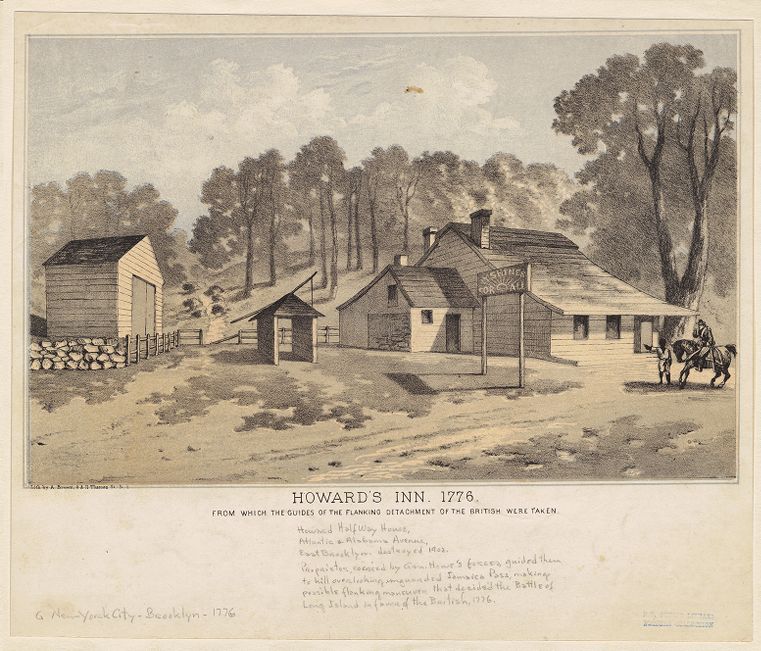
A lesser‑known but critical element of Howe’s success came from a small roadside tavern (shown below) known as Howard’s Half‑Way House, situated along Jamaica Road. In the pre‑dawn hours of August 27th, British officers stopped at the inn and compelled its owner, William Howard, and his son Abraham to serve as guides through the dark, winding approaches of Jamaica Pass. Their intimate knowledge of the local terrain allowed Howe’s massive column to move with uncanny precision, avoiding every American patrol and slipping undetected behind Washington’s left flank. The episode underscores how the fate of the Continental Army hinged not only on battlefield decisions, but on the leverage of local civilians whose forced cooperation provided the British with the exact intelligence they needed to execute the war’s most devastating early envelopment.
Though the Battle of Long Island ended in a crushing defeat, it permanently reshaped Washington’s operational philosophy. The disaster forced him to adopt irregular tactics, mobile defenses, and increasingly sophisticated intelligence networks to keep the revolution alive. The night march through Jamaica Pass remains one of the clearest case studies in how a single overlooked geographic chokepoint can determine the fate of an entire campaign.
