
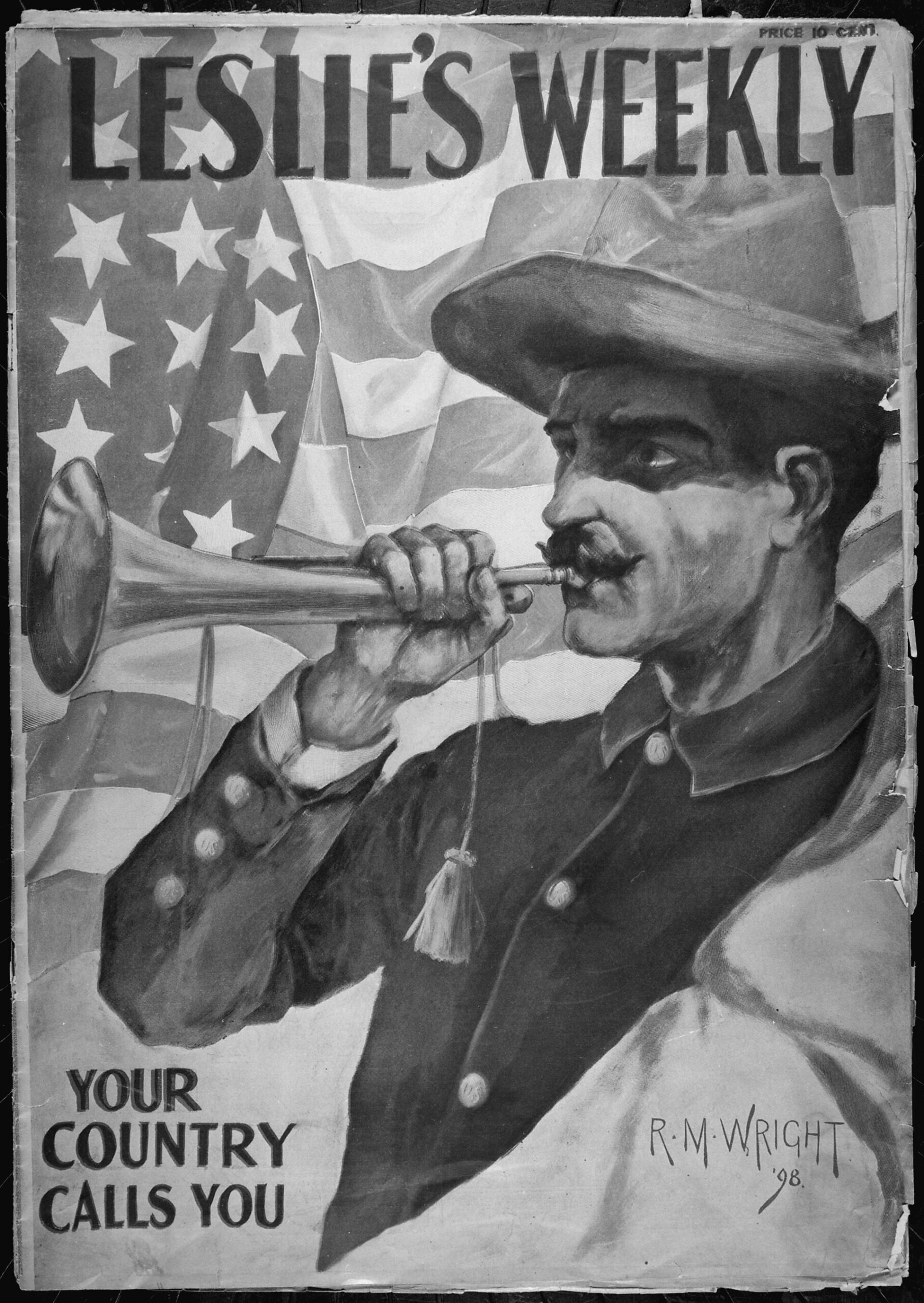
On June 30, 1898, as the Spanish–American War surged across newspaper headlines, Leslie’s Weekly placed a single, urgent message on its cover: “Your Country Calls You.” Published at a moment when young volunteers were boarding trains for southern training camps and the nation was still reeling from the loss of the USS Maine, the illustration captured the raw patriotic energy of a country stepping hesitantly—but decisively—onto the world stage.
The men who saw this cover in barbershops, train stations, and corner newsstands were ordinary clerks, farmhands, and factory workers suddenly confronted with the possibility of service. Many had never traveled beyond their hometowns. Yet the magazine’s stirring imagery—bold, heroic, and unmistakably idealized—reflected the powerful belief that America’s sons were answering a historic call to defend Cuban civilians, avenge national honor, and prove the nation’s strength abroad.
In that summer week, as Rough Riders fought through the jungles near Santiago and naval guns thundered off the coast, this cover became part of the emotional fabric of the war effort. It was more than a piece of art; it was a public summons, a reminder that the fate of the conflict rested not only on generals and admirals, but on the courage of everyday Americans willing to step forward when their country asked.
Image: Leslie’s Weekly, June 30, 1898. National Archives (NARA 533225), public domain.
