
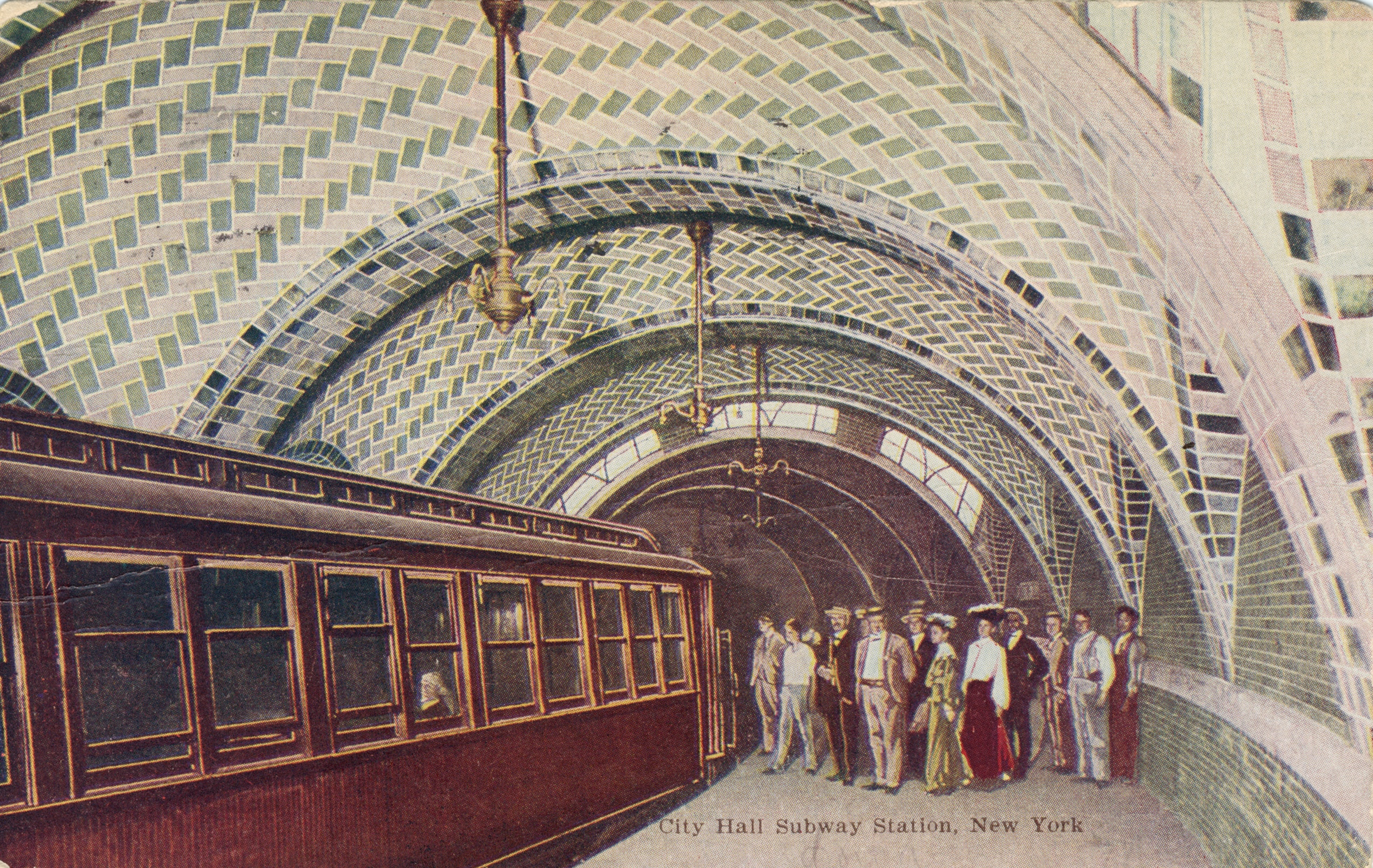
On October 27, 1904, New York City’s first subway line opened, beginning a new chapter in the metropolis’s history. At about 2:35 p.m., Mayor George B. McClellan took the controls of the inaugural train at City Hall station. The new line stretched 9.1 miles north to 145th Street, connecting Lower Manhattan with Harlem.
Opening day brought crowds and celebration. About 150,000 New Yorkers rode the subway that Thursday, paying a nickel for a journey beneath the city’s busy streets. What had long seemed an elusive promise—rapid underground transportation—was suddenly a reality.
The original City Hall station was the line’s architectural showpiece, with Guastavino-tiled vaults, elegant chandeliers, and leaded skylights. But its graceful curve proved a practical liability: center doors created boarding difficulties, and its short platform could not easily accommodate longer trains. With ridership dwindling, the station closed on December 31, 1945.
Today, trains still pass through the old station on the 6 line’s turnaround loop. Riders can catch a glimpse from a passing train, while New York Transit Museum members can explore it on guided tours—a rare opportunity to step inside the ornate setting where the city’s subway era began.
