
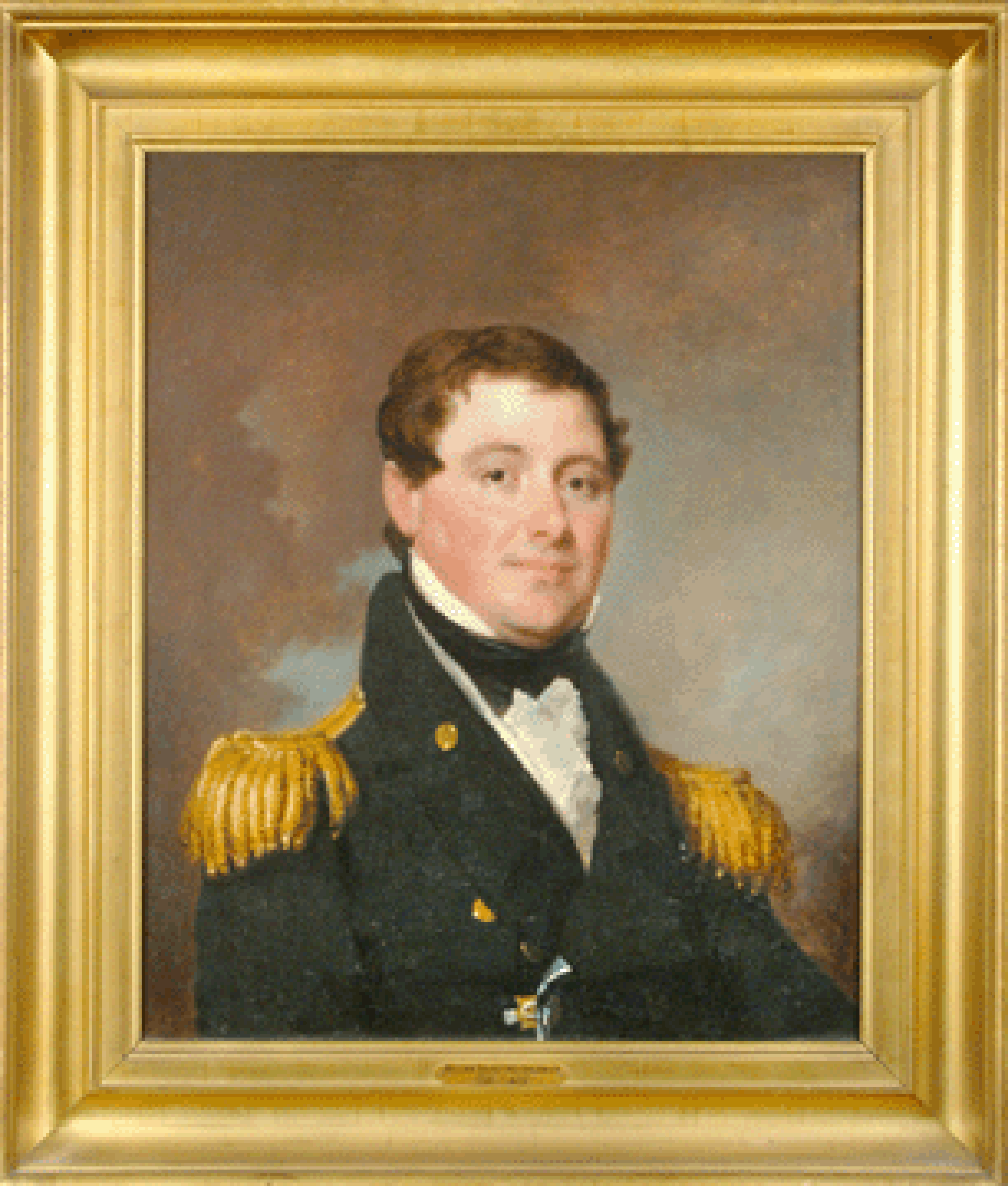
On November 11, 1847, a force of more than seven hundred American sailors and Marines landed at Mazatlán, Mexico, capturing the important Pacific port without firing a shot. Operating under Commodore William Branford Shubrick (shown), USS Independence, USS Congress, and USS Cyane took positions covering the town and its landing approaches. Following a morning demand for surrender and the withdrawal of the Mexican garrison under Lieutenant Colonel Rafael Telles, Captain Elie A. F. La Vallette led the landing force ashore. The Americans marched through the town to the barracks, where they raised the United States flag.
The seizure formed part of the Navy’s Pacific Coast campaign to control Mexican ports, restrict the movement of imported supplies, and take possession of valuable customs revenues. La Vallette became military governor, while approximately four hundred sailors and Marines remained as the occupying garrison. American officials assumed control of customs collection, and Army engineer Lieutenant Henry W. Halleck directed the construction of defensive works protecting the town’s approaches. Control of Mazatlán thus required more than the presence of warships offshore: it depended on a fortified foothold ashore and an administration capable of governing a busy commercial port.
Although the initial landing was bloodless, the occupation that followed was not. Mexican forces remained active outside the city, and American expeditions encountered armed resistance along the surrounding approaches. Mazatlán nevertheless remained under American control for the rest of the war. Its capture demonstrated how concentrated naval firepower could compel the abandonment of an important port without an initial bombardment, while the ensuing occupation revealed the continuing demands of holding territory beyond the waterfront.
