
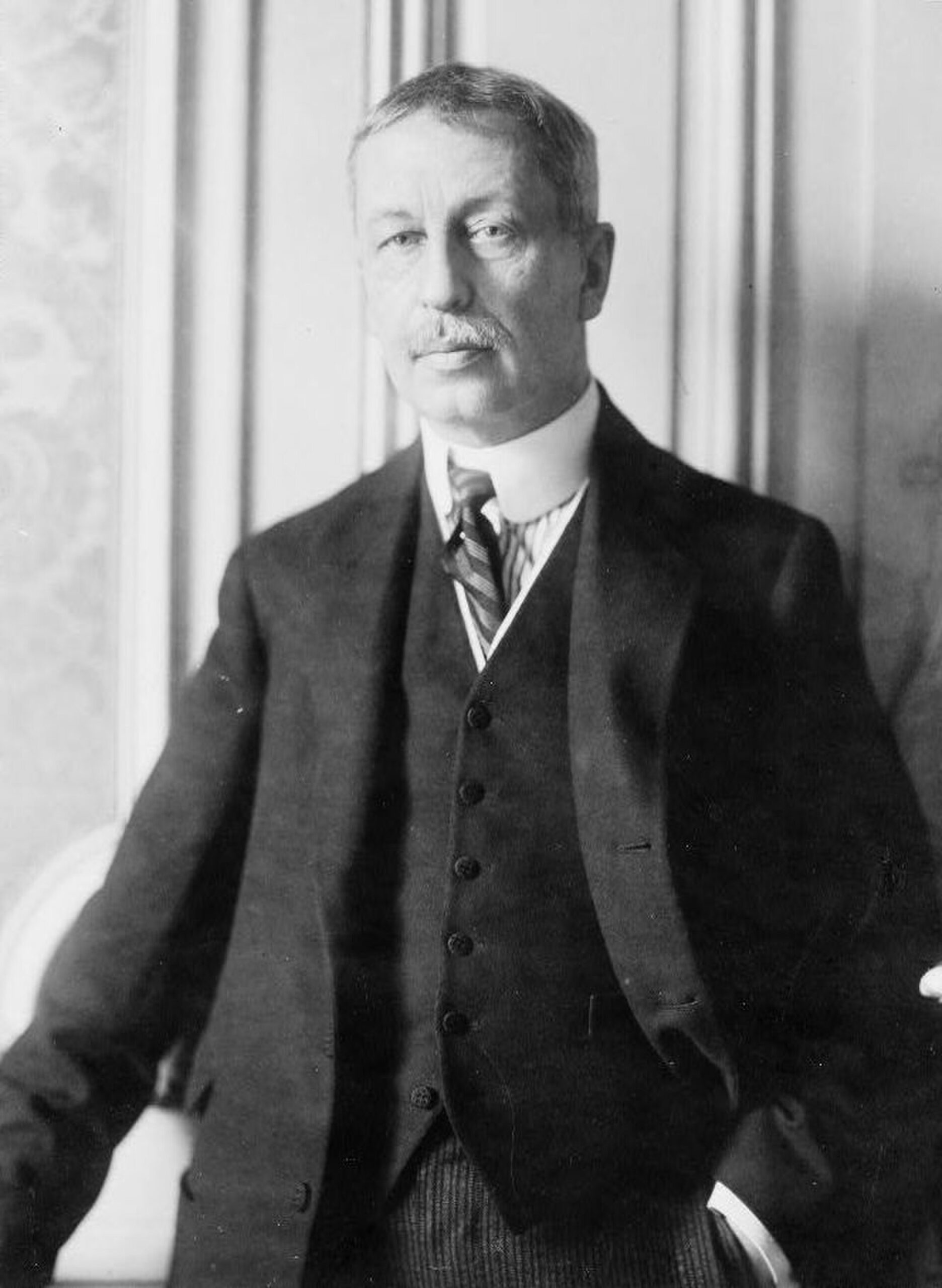
On August 25, 1921, American diplomat Ellis Loring Dresel (shown) and German Foreign Minister Friedrich Rosen met in Berlin to sign the Treaty Between the United States and Germany, the bilateral peace agreement that formally settled the First World War between the two nations. Because the U.S. Senate had refused to ratify the Treaty of Versailles—primarily over objections to the League of Nations covenant—the United States never joined the postwar international system created in Paris, leaving it without a formal peace settlement even after the 1918 armistice.
Although Congress had already declared the war ended through the Knox–Porter Resolution on July 2, 1921, that act provided no diplomatic framework. The Berlin signing supplied the essential legal structure: Germany granted the United States all rights, privileges, and advantages accorded to the other Allied powers under Versailles, while the treaty explicitly avoided any obligations tied to the League of Nations.
Dresel’s signature symbolized the American commitment to independent diplomacy—asserting national sovereignty while still securing the benefits of victory. His work in Berlin helped restore normal diplomatic relations, reopen commercial channels, and lay the groundwork for the rapidly expanding U.S.–German economic ties of the 1920s. The Treaty Between the United States and Germany (1921) remains a clear example of early twentieth‑century American statecraft: a nation shaping the postwar order on its own terms, outside the League, yet fully within the circle of Allied rights.
