
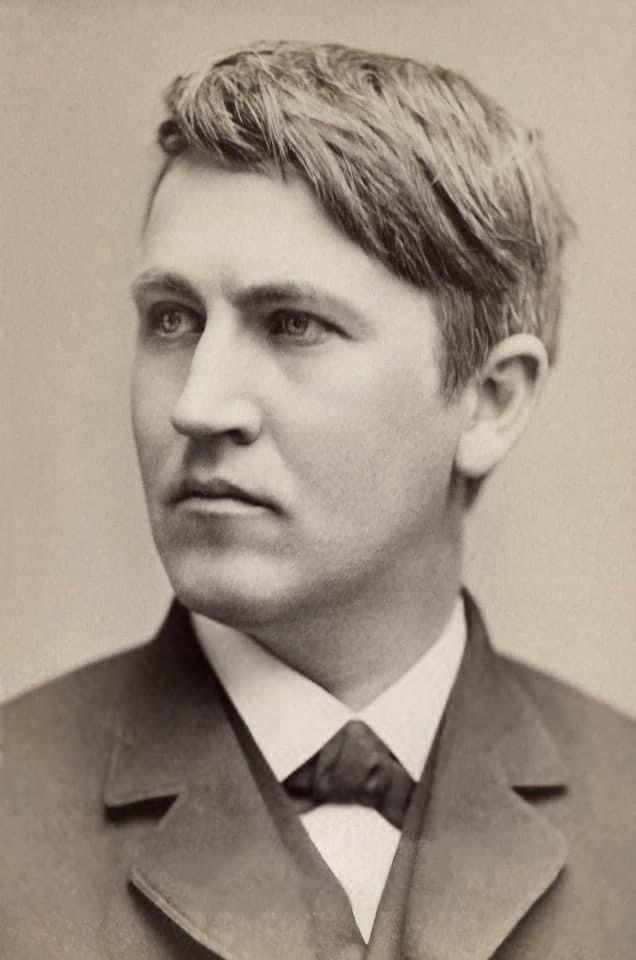
Thomas Edison at 31 years of age in 1878. Two years earlier on August 8, 1876, Edison received a patent for his Autographic Printing (Mimeograph) machine.
Edison’s patent for the autographic printing system was a revolutionary milestone in communication history that single-handedly invented the concept of mass office duplication long before the rise of modern photocopying. The system utilized an ingenious electric pen equipped with a rapid, motorized needle that punctured microscopic holes into a specialized wax stencil sheet as the user wrote. Ink was then rolled across the stencil, forcing the fluid through the holes to create identical, clean copies on blank paper beneath.
The mimeograph machine quickly became the indispensable backbone of American corporate, educational, and political life, allowing businesses and local community groups to mass-produce forms, menus, and flyers in a fraction of the time required by a professional printing press. By lowering the financial and mechanical barriers to printing, Edison’s invention democratized the flow of information across the country, giving ordinary citizens and small organizations the physical tools to broadcast their ideas directly to their communities.
Image via Wikimedia Commons, public domain
