
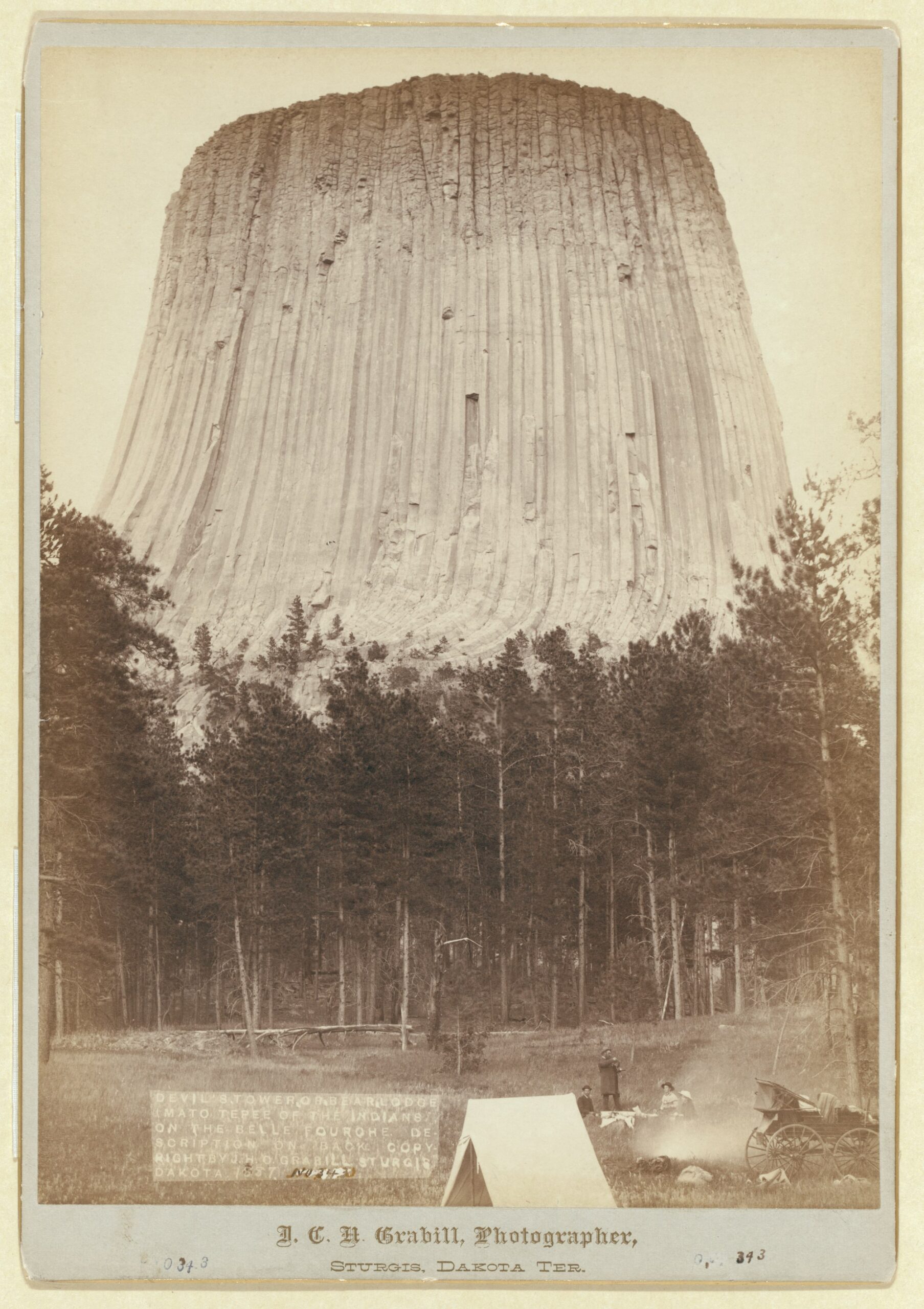
On September 24, 1906, President Theodore Roosevelt used the newly enacted Antiquities Act to proclaim Devils Tower in northeastern Wyoming the first national monument in the United States. The order set aside 1,152 acres around the extraordinary rock formation and established an important early precedent for protecting places of scientific, historic, and natural significance through presidential proclamation.
Rising 867 feet from base to summit—and about 1,267 feet above the Belle Fourche River—Devils Tower has long served as a striking landmark on the northern Plains. Its dramatic columns and isolated profile made it a geographic beacon to explorers, surveyors, and travelers well before its federal designation.
For many Native American peoples, however, the Tower is far more than a landmark. It is a sacred place with deep cultural, spiritual, and historical meaning. The National Park Service identifies ties to the Lakota, Cheyenne, Kiowa, Arapaho, Crow, Shoshone, and other tribes. Names for the site vary by nation and tradition, including Bear Lodge, Bear’s House, Bear’s Tipi, Tree Rock, and other translations. Tribal histories describe the surrounding area as a place for worship, fasting, vision quests, winter camps, and ceremonies.
Roosevelt’s proclamation protected Devils Tower from private appropriation at a formative moment in the American conservation movement. At the same time, the monument’s history reflects continuing questions about the stewardship of Indigenous sacred places, public access, and the relationship between federal conservation policy and tribal cultural traditions.
More than a century later, the anniversary of the proclamation marks both a milestone in U.S. preservation history and an opportunity to recognize the much older Indigenous relationships to the place known to many as Bear Lodge.
Image: Devils Tower, or Bear Lodge, 1887. J. C. H. Grabill, photographer. Via Wikimedia Commons; public domain.
