
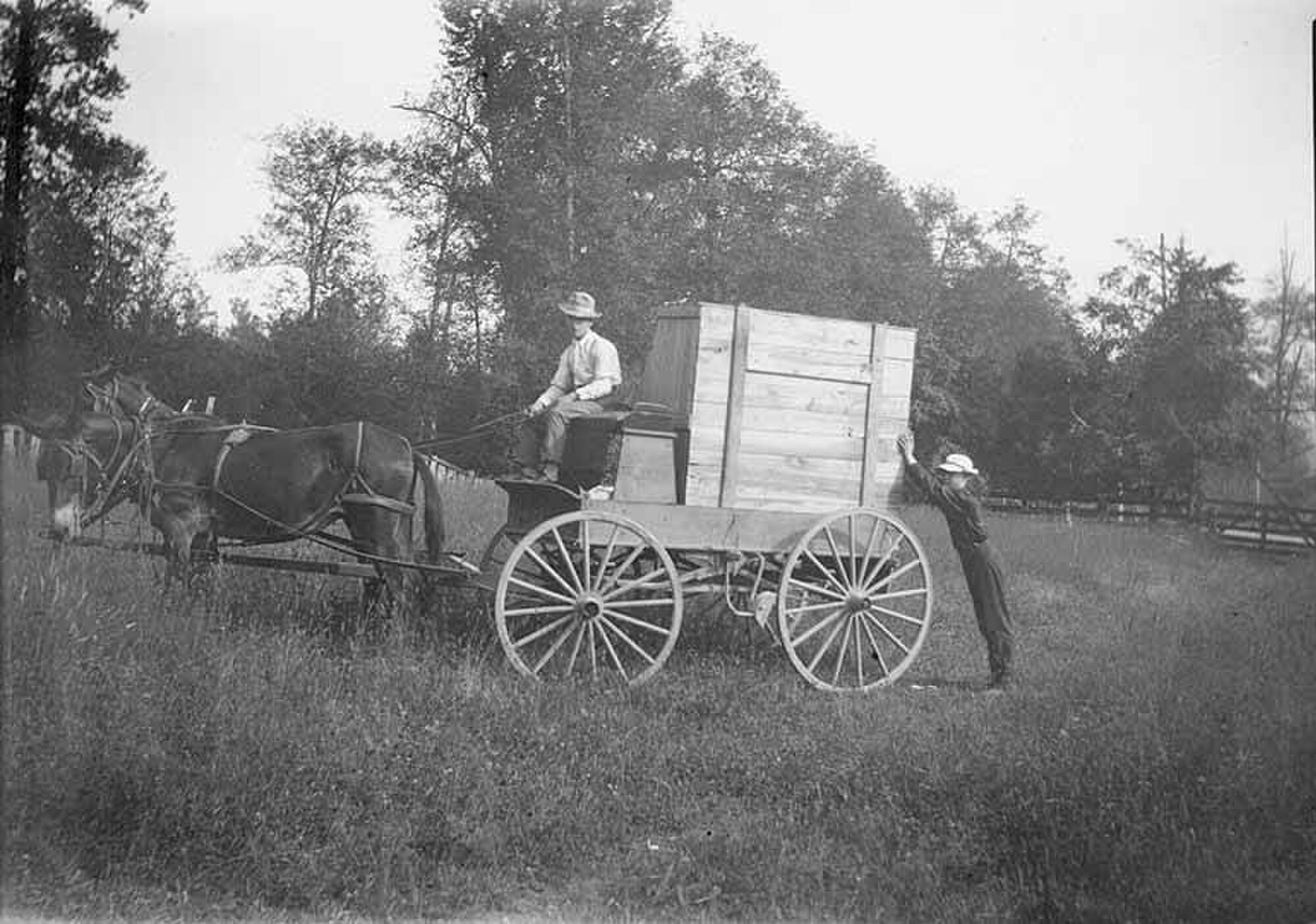
On July 17, 1907, a whimsical frontier drama unfolded along the rugged logging roads near Fall City, Washington, as a heavy freight wagon slowly hauled a massive upright piano through dense Pacific Northwest wilderness. Archival photographs capture the surreal sight of a refined Eastern instrument being dragged across raw frontier terrain.
The hidden story behind the delivery was the collective effort required to get the piano safely up the mountain. The steep, muddy roads were deeply rutted by timber operations, making it impossible for a single team of horses to pull the wagon without risking a catastrophic rollover. Pioneer families and newly arrived railroad laborers spent the entire afternoon laying thick wooden planks ahead of the wheels and steadying the instrument with heavy guide ropes. Their teamwork ensured that a young family’s dream of bringing classical music to a frontier homestead survived the climb.
Pianos were among the most prized possessions in frontier communities, often transported at enormous cost to symbolize refinement, stability, and aspiration. In many settlements, the arrival of a piano marked the beginning of organized social life — dances, lessons, and community gatherings — turning a single instrument into the beating cultural heart of an isolated town.
