
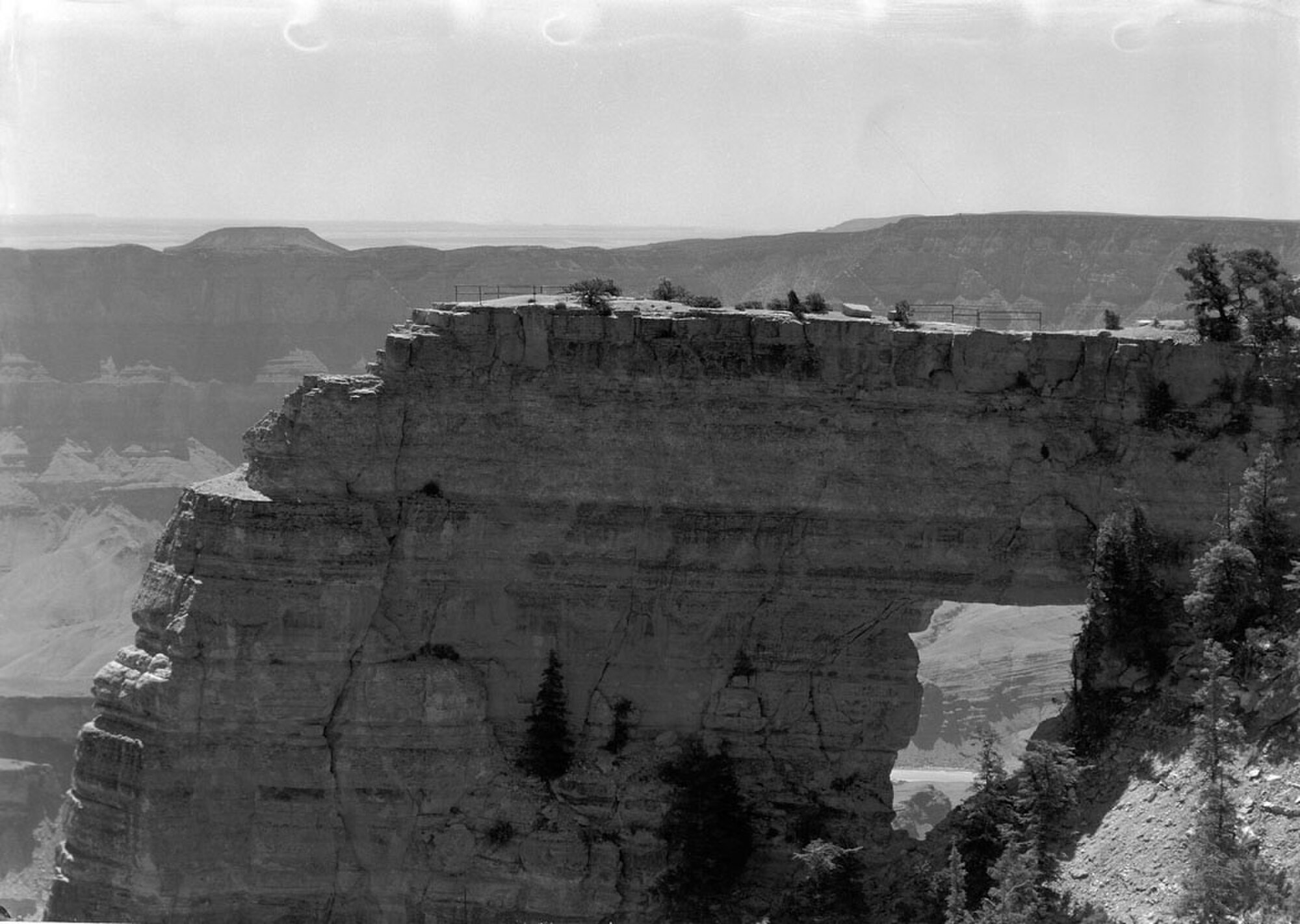
On July 15, 1937, park geologists and engineers documented the pristine natural architecture of Angel’s Window, a spectacular natural limestone arch framing the sky high along the North Rim of Grand Canyon National Park. Visually captured in vintage photographs featuring early safety guardrails, this geological landmark served as a premier destination for a booming generation of automobile tourists who were beginning to explore the American West via the national parks.
The grueling, unmentioned human layer behind the accessibility of Angel’s Window in July of 1937 was the monumental labor of the Civilian Conservation Corps (CCC). During the height of the Great Depression, thousands of young, unemployed men were stationed in remote camps inside the Grand Canyon, spending their summers swinging sledgehammers and blasting solid rock to carve out the narrow scenic roads and precarious walking trails leading to Cape Royal. Working in blistering summer heat on the edge of sheer cliffs, these young laborers built the stone retaining walls and safety lookouts that transformed a treacherous wilderness into an accessible, beloved national sanctuary.
Image: Grand Canyon National Park via Wikimedia Commons, CC BY 2.0