
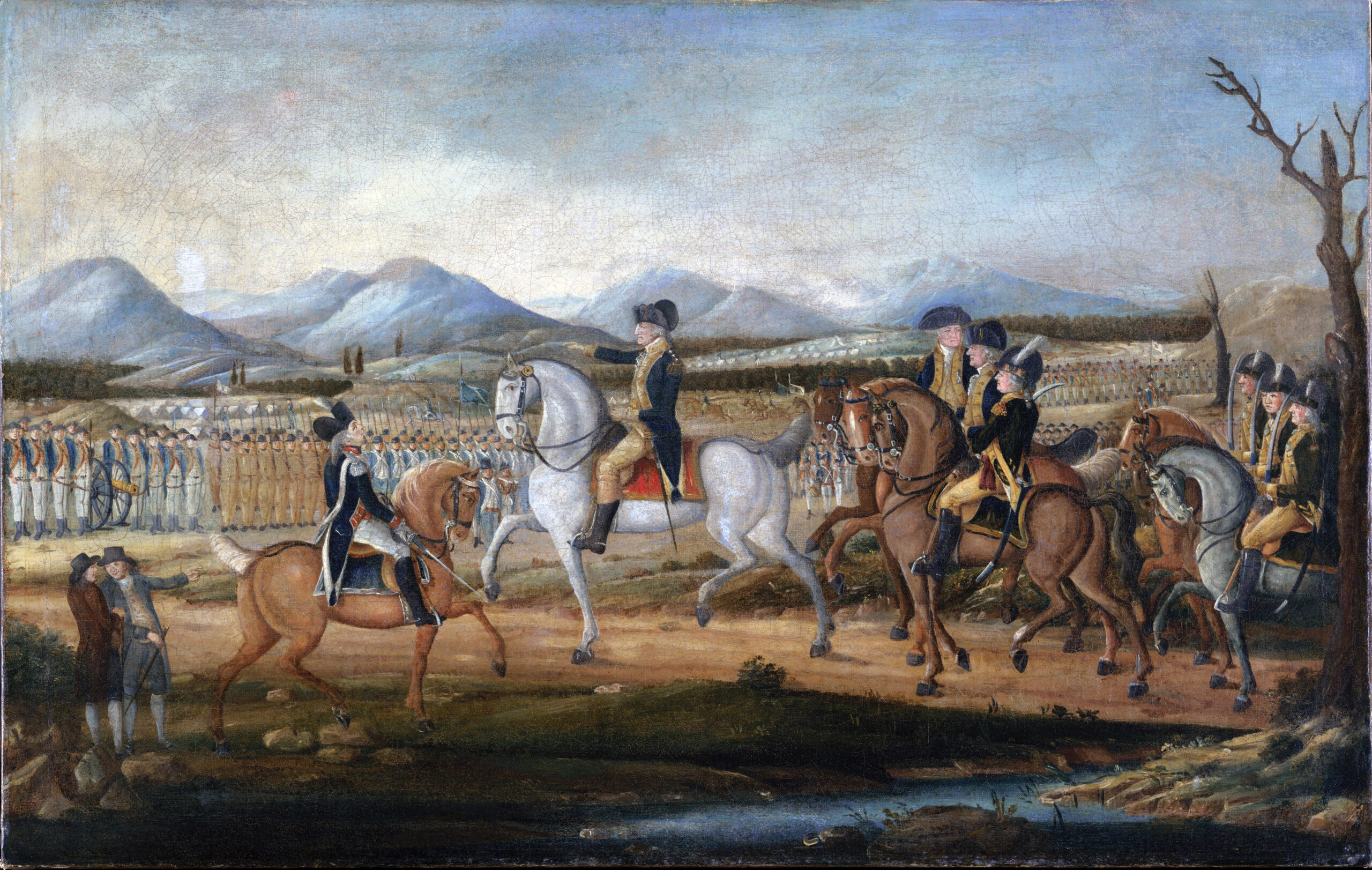
On August 7, 1794, President George Washington issued a dramatic proclamation invoking federal authority under the Militia Acts to suppress the growing Whiskey Rebellion in western Pennsylvania [wikipedia]. Across the rugged frontier, backcountry distillers had launched an armed revolt, assaulting federal tax collectors and threatening to march on Pittsburgh over a steep federal excise tax on whiskey.
The underlying layer of this event marked the absolute trial-by-fire for the newborn American Constitution. Faced with the first direct, armed threat to the federal government’s authority, Washington refused to let the republic collapse into anarchy; he ultimately raised a massive, unified army of 13,000 state militiamen to march into the Pennsylvania hills and crush the uprising. This high-stakes display of executive power decisively proved to a skeptical world that the federal government possessed both the legal authority and the physical teeth to enforce its own laws, permanently securing the rule of law on the American frontier.
