
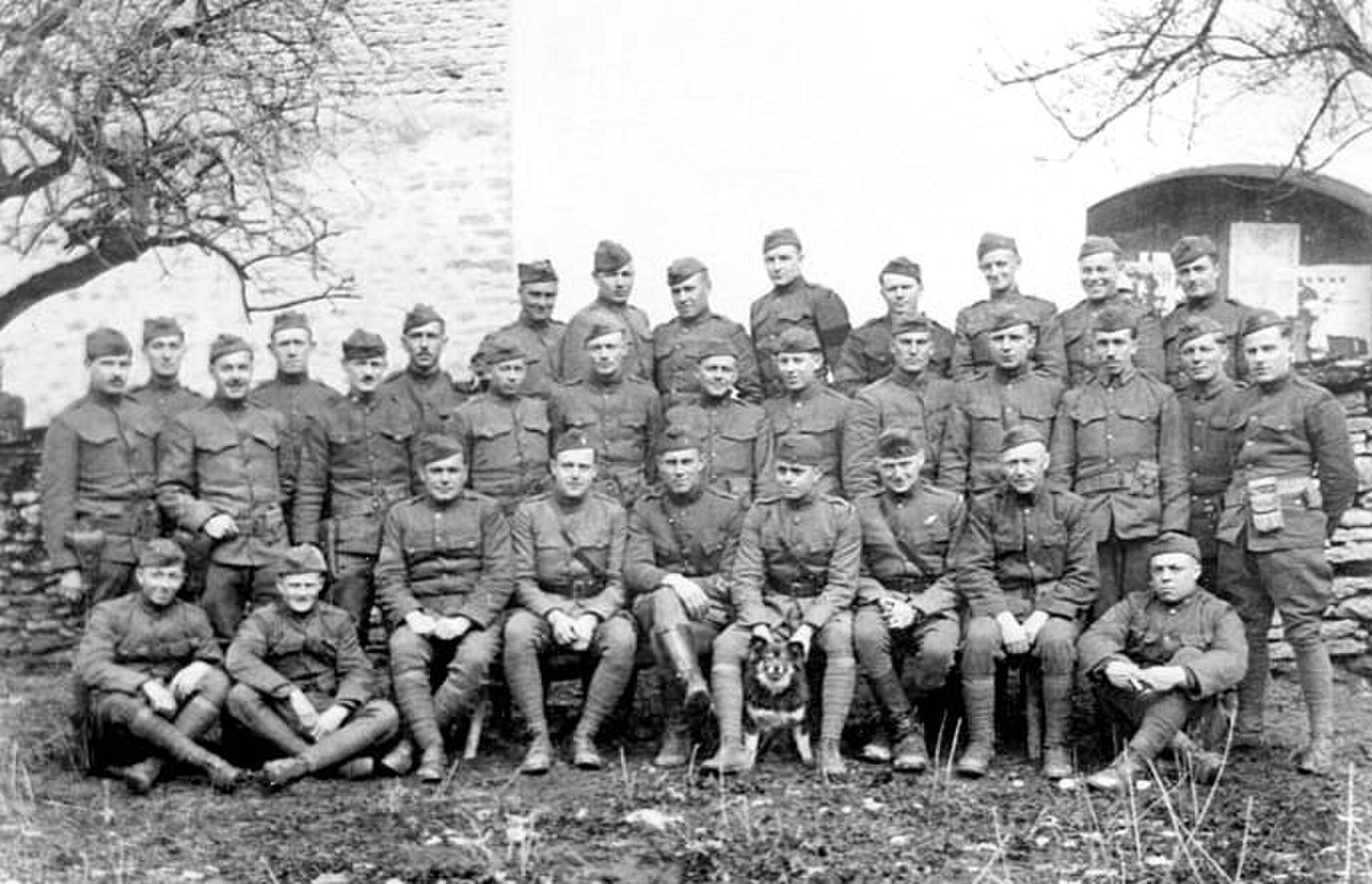
On September 15, 1918, shortly after the Saint-Mihiel Offensive, American Corporal Lee Duncan entered the ruined French village of Flirey to assess whether the area could serve as a flying field for his unit. There he found a badly damaged kennel that had supplied German Shepherds to the Imperial German Army. Amid the wreckage was a starving mother dog and her litter of five newborn puppies, whose eyes were still closed. Duncan brought the canine family back to his unit.
After the puppies were weaned, Duncan gave the mother and three puppies to fellow soldiers, keeping one male and one female. He named them Rin Tin Tin and Nanette, after the small woolen good-luck dolls associated with wartime France. Rin Tin Tin eventually traveled with Duncan to the United States and became one of silent cinema’s best-known animal stars, appearing in a string of popular films for Warner Bros. His success was so important to the studio that he is often credited with helping it survive its difficult early years.
The rescue remains an enduring story of care amid the destruction of World War I: an abandoned litter in a shattered military kennel became the beginning of one of Hollywood’s most unusual and lasting legacies.
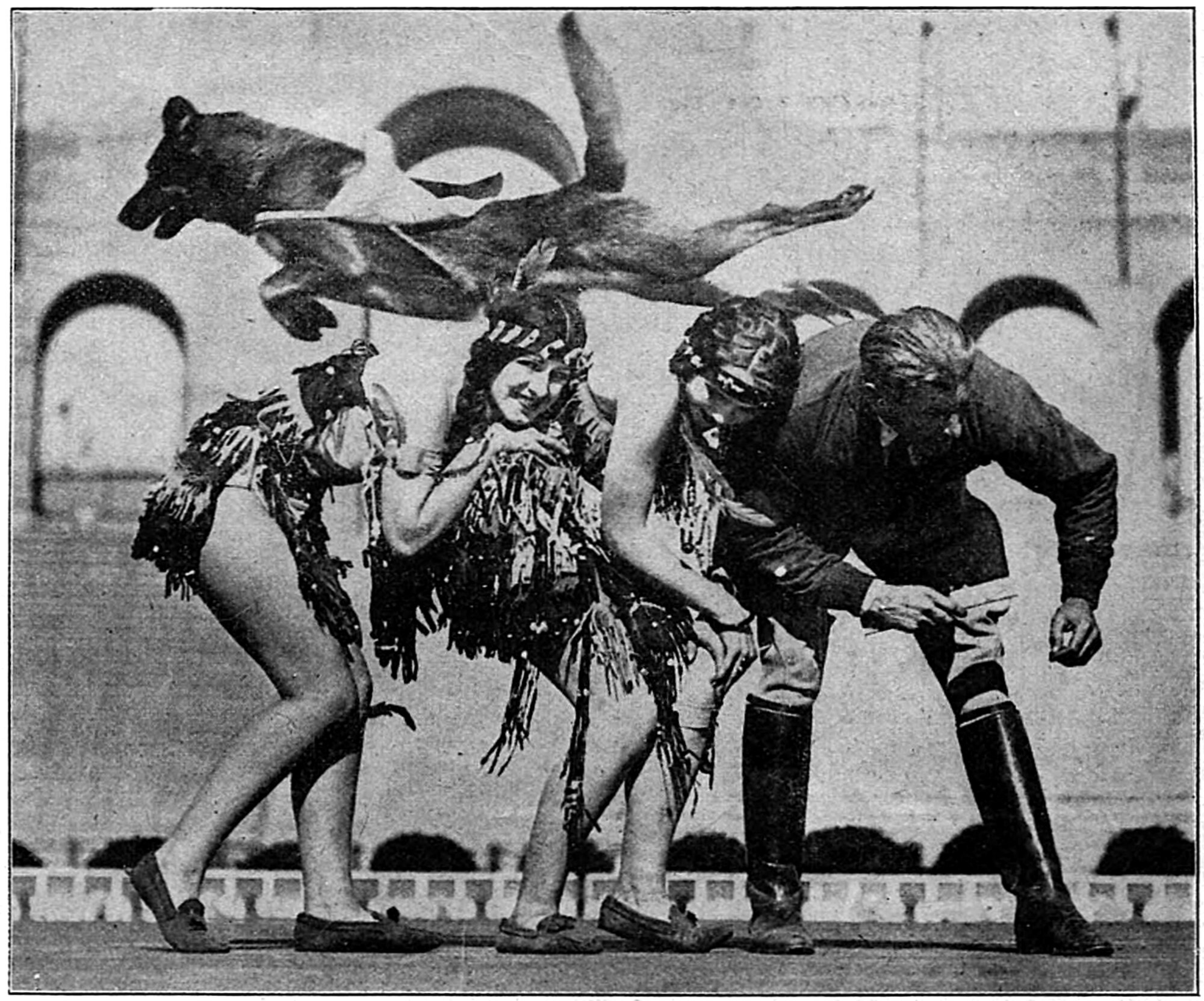
Image: Rin Tin Tin, the canine movie star, jumping over performers in 1923, via Wikimedia Commons, public domain.
