
On July 13, 1775, sixty‑five representatives from the Twelve United Colonies met in Philadelphia to craft an urgent diplomatic address to the Haudenosaunee Six Nations—Mohawk, Oneida, Tuscarora, Onondaga, Cayuga, and Seneca. Prominent revolutionary leaders such as Benjamin Franklin, Samuel Adams, and John Hancock sought to explain the colonies’ rebellion against British rule while reaffirming the long‑standing “covenant chain” of friendship. Their goal was clear: maintain Indigenous neutrality and prevent a devastating frontier war at the very outset of the Revolution. To make their message resonate, Congress employed a vivid metaphor—likening the colonies to a child forced to carry an unjust pack placed upon him by a harsh parent, a rhetorical device meant to align with Haudenosaunee diplomatic tradition.
To honor that tradition fully, Congress ordered that the speech be delivered with a ceremonial wampum belt, a crucial symbol of sincerity and legitimacy in Haudenosaunee political culture. This gesture, often omitted from brief accounts, demonstrated Congress’s deliberate effort to meet Indigenous nations on their own diplomatic terms. In blending European political philosophy with Indigenous legal protocol, the Continental Congress engaged in one of the earliest acts of sovereign American diplomacy—an attempt to secure peace, mutual respect, and strategic stability at a moment when the fate of the Revolution hung in the balance.
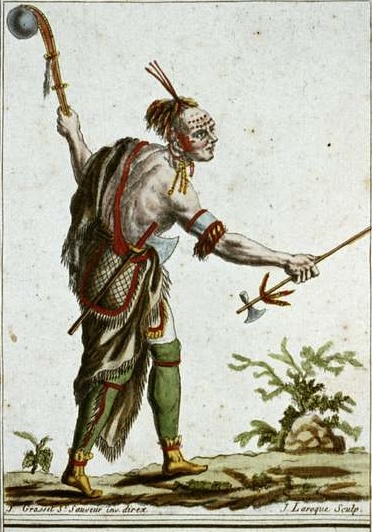
Image Source: From Encyclopédie des Voyages by Jacques Grasset de Saint‑Sauveur, Paris, c. 1796. Image via Wikimedia Commons.
