
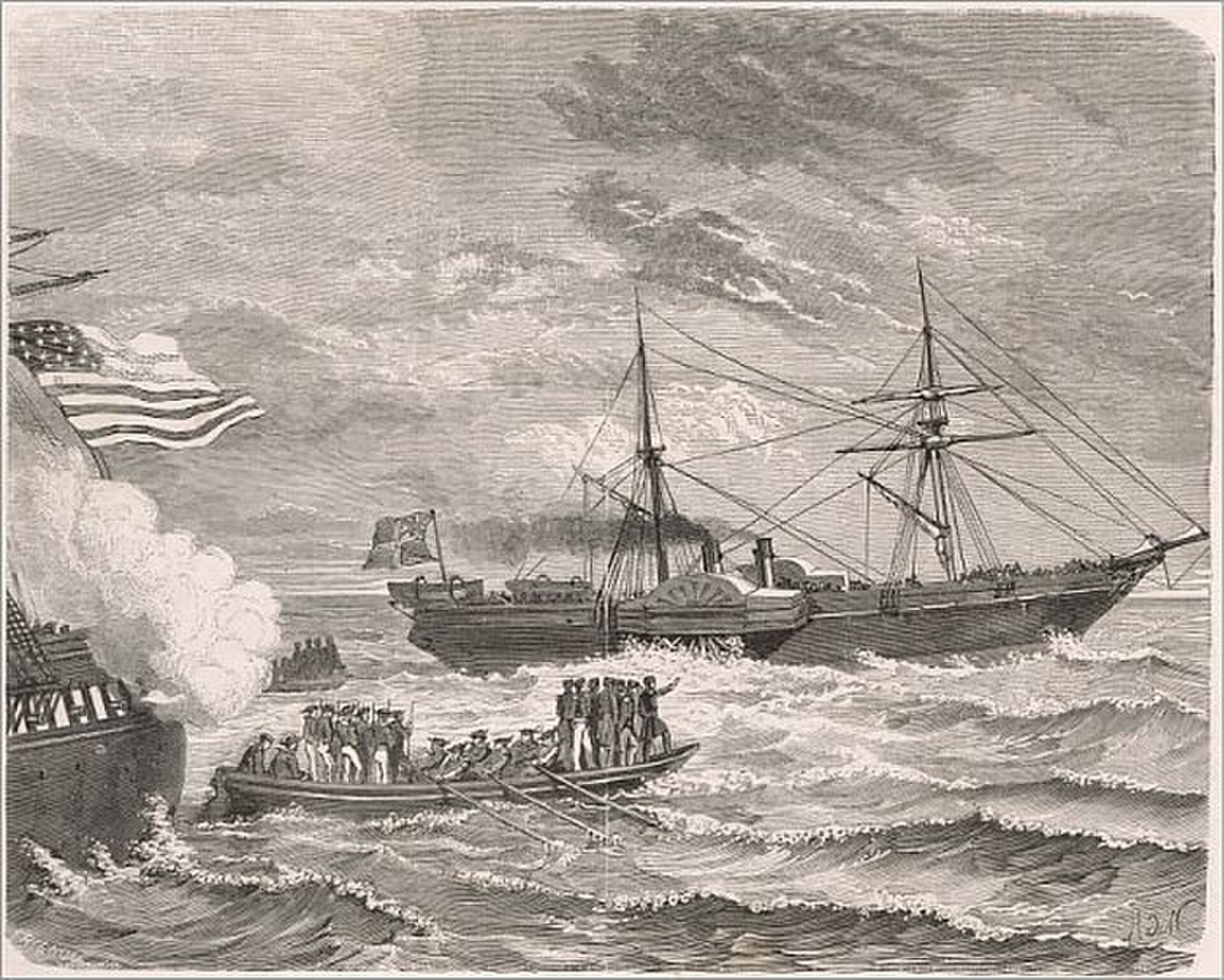
On November 8, 1861, a Union naval captain made a decision that turned a wartime interception into an international crisis. Captain Charles Wilkes, commanding the USS San Jacinto, stopped the British mail steamer Trent in the Bahama Channel and removed Confederate envoys James Mason and John Slidell, who were traveling to Europe to seek support for the Confederacy. Many Americans celebrated the seizure. Britain regarded it as an affront to its flag and the rights of neutral shipping.
Wilkes had acted without orders from Washington. After firing warning shots to stop the steamer, he dispatched an armed boarding party to take the envoys into custody. But he allowed Trent to continue its voyage rather than bringing the vessel before a prize court—a decision that became central to the American government’s explanation for releasing the prisoners.
Britain demanded the envoys’ release and an apology, while preparing for possible war and sending more than 11,000 troops to Canada during December. The Lincoln administration faced the prospect of a confrontation with Britain while already fighting the Confederacy. Secretary of State William Seward ultimately agreed to free Mason and Slidell, acknowledging that Wilkes had failed to follow the legal procedures required for the seizure. Washington offered no explicit formal apology, but Britain accepted the explanation and release as sufficient to resolve the crisis.
The lasting significance of the Trent Affair lies not only in the dramatic seizure, but in the restraint that followed. An action applauded at home had endangered the Union’s position abroad. By releasing the prisoners, the Lincoln administration defused an immediate threat of war with Britain—a reminder that protecting a nation’s interests sometimes requires stepping back from a celebrated success.
