
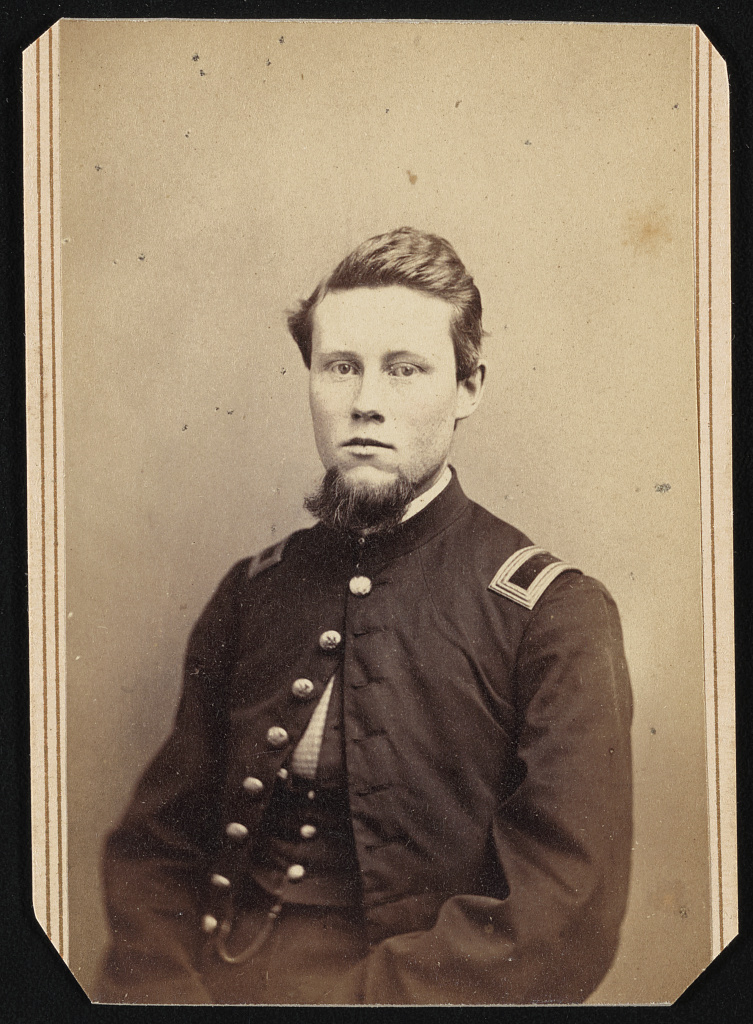
The human cost of the American Civil War came sharply into focus on September 29, 1864, when First Lieutenant Charles Augustus Kimberly of Company E, 112th New York Infantry, was severely wounded at the Battle of Chaffin’s Farm in Virginia. The fighting formed part of Lieutenant General Ulysses S. Grant’s autumn offensive against the Confederate defenses of Richmond and Petersburg.
Kimberly had enlisted at Westfield in Chautauqua County, New York, in August 1862 and rose from corporal to first lieutenant. During the bitter fighting at Chaffin’s Farm, he suffered a severe wound to his left leg. The battle, fought September 29–30, brought important Union gains against Richmond’s outer defenses, including the capture of Fort Harrison, but at a terrible cost in killed and wounded.
Kimberly’s wound ultimately required the amputation of his left leg. He was discharged for wounds on March 23, 1865, ending his active military service before the war’s conclusion. His experience stands as a personal reminder of the physical sacrifices borne by the soldiers who fought in the campaign to force the Confederacy’s capital.
Image credit: First Lieutenant Charles Augustus Kimberly of Company E, 112th New York Infantry, in uniform. Library of Congress; no known restrictions.
